
Should Loose Parquet Be Repaired Before Sanding?

by Darren Admin
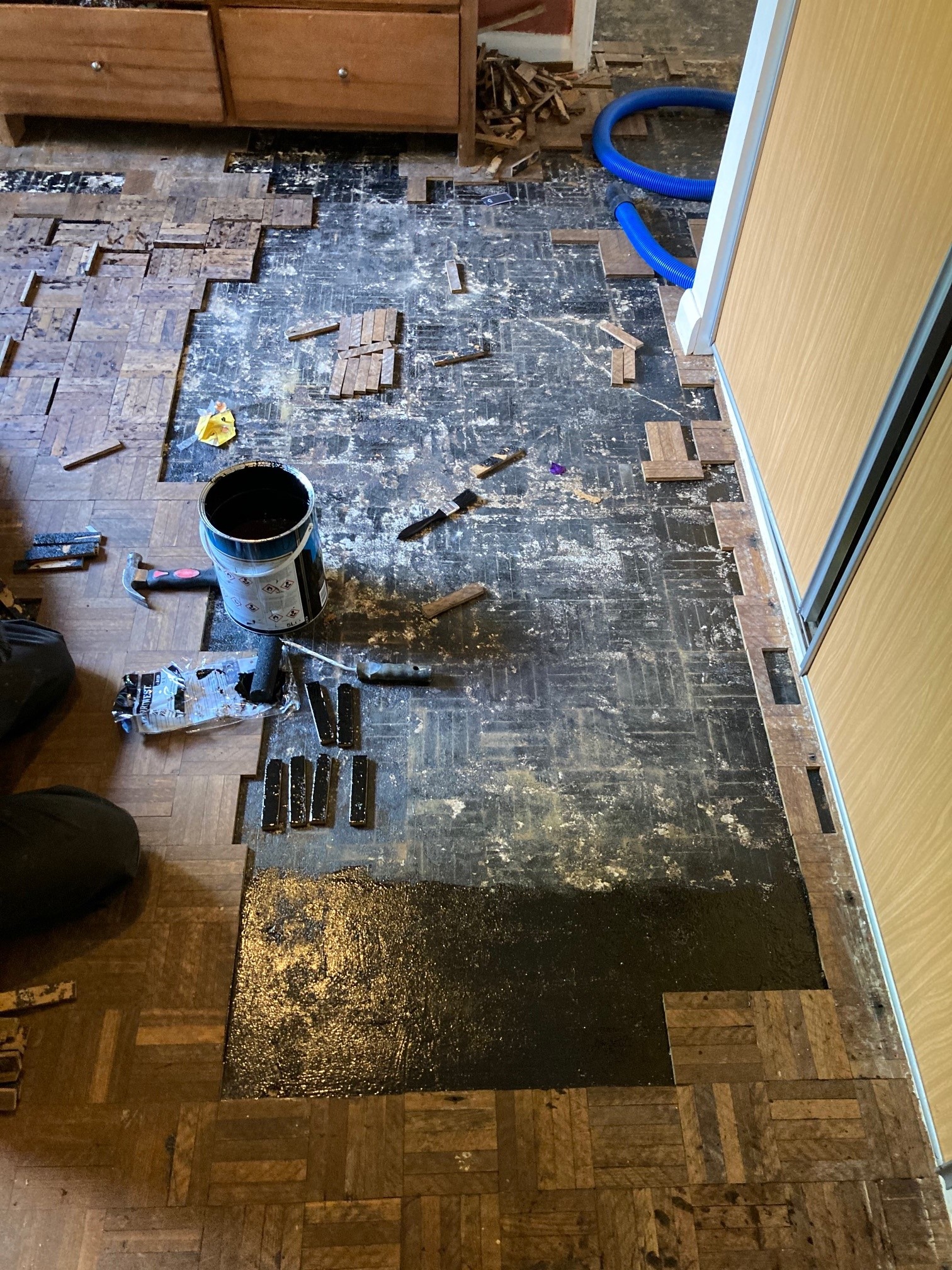
Parquet flooring has a distinctive appearance that many homeowners in older properties value. The repeating geometric blocks give a room character, but those individual blocks also need to remain firmly bonded. When parquet becomes loose, the issue is no longer just about how the floor looks; it becomes a stability problem that affects whether sanding can be done safely and successfully.
The short answer is yes: loose parquet blocks should normally be repaired before sanding begins. Sanding can remove old finish, scratches and surface wear, but it cannot re-bond a block that has lost its grip on the subfloor. If the floor moves under the machine, the final result becomes less predictable.
This guide explains why repair comes first, what can happen if loose blocks are sanded too soon, how professionals assess the problem, and what homeowners should realistically expect from a properly prepared parquet floor.
The Simple Answer: Repair Comes First
Sanding is a surface process. It removes coatings and a small amount of timber from the top face of the wood. It does not solve movement underneath. A loose block may look flat, but if it is no longer bonded to the base, it can shift under pressure.
That movement matters. A loose block can tip slightly, catch at the edge, settle after the floor has been finished, or continue moving beneath a new coat of lacquer or oil. The floor may look improved for a short period, but the underlying problem remains.
A repair-first approach gives the floor a stable base. Once loose blocks are secured, sanding and finishing can work as intended: improving the surface rather than trying to hide instability.
What Counts As Loose Parquet?
Loose parquet is not always obvious. Some blocks lift at the corner or rock underfoot. Others look normal from above but sound hollow when tapped or click when walked across. A block can appear level while the bond beneath it has already failed.
The main signs include rocking blocks, hollow-sounding areas, clicking underfoot, raised edges, small gaps opening around blocks, and sections that feel different from the rest of the floor. One loose block is a local issue. Several loose zones across the room may suggest wider adhesive failure or subfloor movement.
The useful distinction for a homeowner is between surface wear and actual movement. Scratches, dull finish and light staining are surface issues. A block that moves is a repair issue and should be assessed before sanding is booked.
What Happens If You Sand Loose Parquet Blocks?
Sanding loose parquet creates avoidable risk. The problem is not that every loose block will immediately fly out of the floor, but that unstable blocks make the sanding result harder to control.
| Problem | Why it happens | Possible result |
|---|---|---|
| Torn-out blocks | A sanding machine can catch a raised or moving edge | A small repair becomes a larger repair |
| Uneven sanding | The block tips or compresses under pressure | The block may sit proud once re-fixed later |
| Wider movement | Vibration affects neighbouring weak blocks | More of the floor may need repair |
| Finish failure | Movement continues beneath the coating | Cracks or visible lines can appear around blocks |
| Repairs stand out later | The repair is done after the finish has been applied | Blending becomes more difficult |
| Extra cost | Work has to be stopped, repaired and revisited | The project becomes less efficient |
These outcomes are not always dramatic on the day of sanding. Some appear weeks or months later as the floor moves in use. That is why preparation is so important.
Why Parquet Blocks Work Loose
Parquet blocks work loose for several reasons, and the cause affects the repair decision. A block is only as reliable as the bond underneath it and the surface it is bonded to.
Ageing adhesive
Older parquet floors were often fixed with adhesive systems that can become brittle or crumbly with age. The timber may still be sound while the adhesive underneath has reached the end of its useful life.
Bitumen and old bonding materials
Some period parquet floors were laid with bitumen-based products. When old bitumen breaks down, it can leave residue on the underside of the block and the subfloor. New adhesive may not bond well unless the old material is dealt with properly.
Moisture and humidity changes
Wood expands and contracts with moisture. Leaking radiators, plumbing leaks, damp subfloors, patio doors, plant pots, kitchens and repeated humidity changes can weaken the bond and encourage block movement.
Traffic and wear
High-traffic routes, doorways and areas beneath heavy furniture can place repeated stress on parquet blocks. One moving block can also place strain on the blocks around it.
Previous poor repairs
Repairs that were rushed, glued over old residue or carried out without resolving moisture or subfloor issues may fail again. Repeated failed repairs are often a sign that the underlying cause was never dealt with.
For a deeper explanation of causes, the companion article on why parquet blocks become loose should be used as the supporting diagnostic piece.
How Professionals Identify Loose Blocks Before Sanding
A professional will usually inspect the whole floor, not just the obvious loose area. Parquet can fail in patches, so several parts of the room may need checking before a sanding plan is agreed.
The assessment normally looks for movement underfoot, hollow sounds, lifted edges, gaps, adhesive residue, moisture signs, previous repairs and subfloor movement. The goal is to separate a small local repair from a wider stability problem.
This matters because the right repair method depends on the cause. Re-fixing one loose block is different from stabilising a larger area where old adhesive has failed across multiple blocks.
How Professionals Repair Loose Parquet Before Sanding
Loose parquet repairs vary depending on the block, adhesive, subfloor and room conditions. The aim is not simply to put the block back in place; it is to create a reliable bond that will cope with sanding, finishing and normal use.
Re-securing individual blocks
Where only one or two blocks have moved and the timber is sound, the repair is usually local. The block is carefully dealt with, the bonding surfaces are prepared, and the block is re-secured so it sits correctly with the surrounding floor.
Repairing a small loose area
A small patch of loose parquet may require several blocks to be stabilised together. This helps prevent one repaired block from being held firm while neighbouring blocks continue to move.
Replacing missing or damaged blocks
If blocks are missing, broken or damaged beyond reuse, selective replacement may be possible. Matching can often be close, especially after sanding and finishing, but older timber changes with age and light exposure, so a perfect match should not be promised. Where relevant, guidance on whether missing parquet blocks can be replaced should support this section.
Stabilising larger sections
Where several areas are loose, wider stabilisation may be needed. At that point the work is no longer just a small patch repair; it becomes part of a broader restoration decision.
Allowing repairs to cure before sanding
Repairs need enough time to become stable before sanding continues. If sanding starts too soon, the repaired blocks may move under pressure and the benefit of the repair can be lost.
Repair First Vs Sand First
The difference between repairing first and sanding first is usually clear once the floor is viewed as a complete system rather than just a surface.
| Factor | Repair first | Sand first |
|---|---|---|
| Stability | Loose blocks are secured before surface work | Movement remains under the sander |
| Sanding quality | The surface can be sanded more evenly | Blocks may move or tip under pressure |
| Finish durability | Coatings sit over a more stable floor | Movement can crack or disturb the finish |
| Repair blending | Repairs can be blended during sanding and finishing | Repairs later may stand out more |
| Risk of extra damage | Lower when movement is addressed first | Higher if blocks catch or loosen further |
| Homeowner value | More reliable long-term result | Short-term improvement may fail sooner |
Can Loose Parquet Still Be Restored?
Yes, many parquet floors with loose blocks can still be restored. Localised looseness is common in older parquet and does not automatically mean the floor has failed. If the original blocks are present, the timber is sound and the subfloor is stable, repair and restoration may be very realistic.
Where movement is more widespread, wood floor restoration may involve stabilising loose sections, replacing damaged blocks, correcting earlier repairs, sanding the floor and applying a suitable finish. The repair stage is what allows the sanding stage to produce a more consistent result.
Replacement is usually considered when the damage is extensive, moisture problems are severe, large areas are missing, or the floor can no longer be made stable in a sensible way. The decision should be based on cause, scale and condition, not simply the fact that some blocks are loose.
When Repairs Are Usually Straightforward
Some loose parquet issues are relatively contained. These are often good signs that repair may be practical before sanding.
- One or two blocks are loose.
- The affected area is small and easy to define.
- The original blocks are still present.
- The timber is sound rather than soft, rotten or broken.
- There is no obvious ongoing moisture problem.
- The subfloor feels stable underfoot.
- The parquet pattern remains intact.
These signs do not guarantee a simple repair, but they are positive indicators. They suggest the floor should be assessed before replacement is considered.
When The Problem May Be More Serious
Other signs suggest that loose parquet may be part of a wider issue.
- Large areas of the room sound hollow.
- Blocks lift or move in several separate places.
- There is a known history of leaks or damp conditions.
- Previous repairs have failed repeatedly.
- Many blocks are missing, broken or distorted.
- The subfloor moves, flexes or feels uneven.
- The floor has widespread adhesive failure.
These warning signs do not automatically mean the floor needs replacing. They mean the assessment needs to look beyond the surface and identify whether the base, adhesive or moisture condition is causing the problem.
Common Homeowner Mistakes
- Sanding first and hoping the finish will hold the blocks down.
- Ignoring hollow sounds because the floor still looks flat.
- Gluing over old adhesive without proper preparation.
- Using unsuitable adhesive for the floor conditions.
- Rushing the repair before the adhesive has stabilised.
- Dragging heavy furniture over known loose areas.
- Delaying investigation after a leak or moisture problem.
- Expecting replacement blocks to match old timber perfectly.
Most of these mistakes come from treating loose parquet as a surface issue. It is better understood as a stability issue that affects the success of the later sanding and finishing work.
Common Misconceptions
Sanding fixes loose parquet
Sanding does not restore the bond underneath a block. Movement needs to be repaired before surface work begins.
Loose parquet always means replacement
Not usually. Localised loose blocks can often be repaired and blended into a restored floor.
One loose block is not worth repairing
One moving block can damage neighbouring blocks over time. Early repair is often simpler than waiting.
Old parquet cannot be restored
Many older parquet floors remain good restoration candidates if the timber and subfloor are sound.
Every repair will be invisible
A good repair can blend well, but exact invisibility cannot always be promised, especially where older timber and replacement blocks are involved.
All movement is normal
Some seasonal movement is normal in timber, but blocks that rock, lift, click or sound hollow should be checked.
Loose Parquet In Older Floors: A Normal Finding
Loose blocks in older parquet floors are common. That does not make them harmless, but it does make them a normal part of many restoration projects. Adhesives age, homes settle, and parquet floors experience decades of foot traffic and environmental change.
An experienced parquet specialist will expect to find some movement in many period floors and will usually treat repair and stabilisation as part of the preparation before sanding. The important question is how much movement exists and whether the underlying cause can be controlled.
Homeowner Checklist Before Parquet Sanding
Use this checklist before arranging sanding or before the survey takes place.
- Walk the floor and note where blocks click, dip or rock.
- Listen for hollow-sounding areas in traffic routes and doorways.
- Look for raised edges, gaps or lifted finish around block joints.
- Check areas near radiators, patio doors, kitchens, external walls and past leak points.
- Mention any known water damage or previous repairs during the assessment.
- Ask whether loose blocks are included in the preparation plan.
- Ask how curing time is managed before sanding begins.
- Do not assume a new finish will hold loose blocks in place.
What To Expect From A Properly Prepared Parquet Floor
A properly prepared parquet floor should feel stable before sanding begins. The aim is not necessarily to make every old block look new, but to remove movement that could affect sanding, finishing and day-to-day use.
Once repairs are complete, sanding can smooth the floor more evenly and finishing can protect the surface more reliably. The finished floor should feel more consistent underfoot, and repaired areas generally blend best when they are sanded and finished as part of the wider floor rather than treated afterwards.
This is the practical value of parquet floor repairs before sanding: the work protects both the appearance and the performance of the final finish.
Final Thoughts
Loose parquet should normally be repaired before sanding. Sanding improves the surface, but it does not solve movement, adhesive failure or loose blocks beneath the finish.
For many floors, the repair work is local and straightforward. For others, widespread looseness, moisture history or subfloor movement may require a broader restoration plan. Either way, stability should come before appearance.
If your parquet floor is worn and also has loose blocks, the best next step is a proper assessment. That will show whether local repair, wider restoration or replacement is the most sensible route before sanding begins.
Frequently Asked Questions
Can loose parquet blocks be sanded?
Loose parquet blocks should not normally be sanded before repair. Sanding can make movement worse, catch raised edges or leave an uneven result. Loose areas should usually be stabilised first.
Should parquet blocks be repaired before sanding?
Yes, where blocks are loose or hollow, repairs should normally come before sanding. A stable floor gives the sanding and finishing stages a better chance of lasting.
Will sanding make loose parquet worse?
It can. A moving block may shift under the machine, and vibration can affect nearby weak blocks. The risk is higher where several blocks are already loose or lifting.
Can loose parquet be repaired without replacing the floor?
Often, yes. Localised loose blocks can often be re-secured, and small areas can be stabilised. Replacement is usually considered only where damage is widespread or the floor cannot be made stable.
Why do parquet blocks become loose?
Common causes include ageing adhesive, old bitumen, moisture, seasonal movement, subfloor instability and previous poor repairs. The cause affects which repair approach is most suitable.
Can old parquet flooring still be restored?
Yes, many older parquet floors can still be restored if the timber is sound, the pattern is largely intact and the movement can be stabilised. Age alone does not decide whether restoration is possible.
How do professionals repair loose parquet before sanding?
Professionals assess the cause, identify loose and hollow areas, stabilise or re-secure affected blocks, allow repairs to settle, then sand and finish the floor once the surface is suitable.
Is repairing loose parquet cheaper than replacement?
Local repairs are often more economical than replacing a whole parquet floor. However, if large areas have failed or moisture damage is severe, replacement may need to be considered alongside restoration options.
Recommended Posts
How Does Dust-Controlled Floor Sanding Work?
08/08/2026
Is Parquet Floor Restoration Worth It?
06/08/2026
Testimonial Five
See more of our customer reviews at Checkatrade.com
YOU’RE IN GOOD HANDS






Contact our local carpet cleaners and local floor sanders near you to discover more about a full selection of floor restoration services.
Contact Us