
How To Choose The Right Finish For Your Wooden Floors

by Darren Admin
The sanding is finished. The dust has settled, the old coating has been stripped away, and the bare boards are smooth underfoot. After years of scratches, dull patches and daily wear, the floor looks cleaner and lighter than it has in a long time. One decision remains, and it will shape the look, feel and lifespan of the floor for years to come: which finish should go on top?
Homeowners often focus heavily on the sanding itself, and that is understandable. But the finish is what the home lives with every day. It affects how the floor appears in morning light, how it feels under bare feet, how easily it cleans, how it wears in busy areas, and how much maintenance it needs over time.
There is no single best finish for every wooden floor. The right choice depends on how the room is used, the level of traffic it receives, the appearance you prefer, the maintenance you are willing to carry out, the condition of the timber, and whether localised repairs may be important in future. This guide explains those trade-offs in practical homeowner terms.
Why The Finish Matters More Than Many Homeowners Realise
Two identical floors in two similar rooms can look very different after a few years purely because of the finish chosen for each. One may still appear even and well cared for. The other may show worn traffic lanes, dull patches where the light catches it, or water marks near a doorway. The timber may be the same. The finish often explains the difference.
The finish is the working surface that protects the timber from daily wear, spills, cleaning, shoes, furniture and sunlight. It also controls the way the grain reads, how reflective the surface is, and whether the floor feels sealed, natural, traditional or contemporary.
The finish also affects future maintenance. Some finishes can be refreshed before they fail completely. Others usually need a fuller sand and recoat when worn through. Choosing a finish is therefore not only an appearance decision. It is a maintenance decision too.
What Does A Wood Floor Finish Actually Do?
A wood floor finish does several jobs at once. Most obviously, it protects the timber. Bare wood is vulnerable to scuffs, spills, furniture marks and ordinary foot traffic. The finish takes much of that wear before the wood beneath is affected.
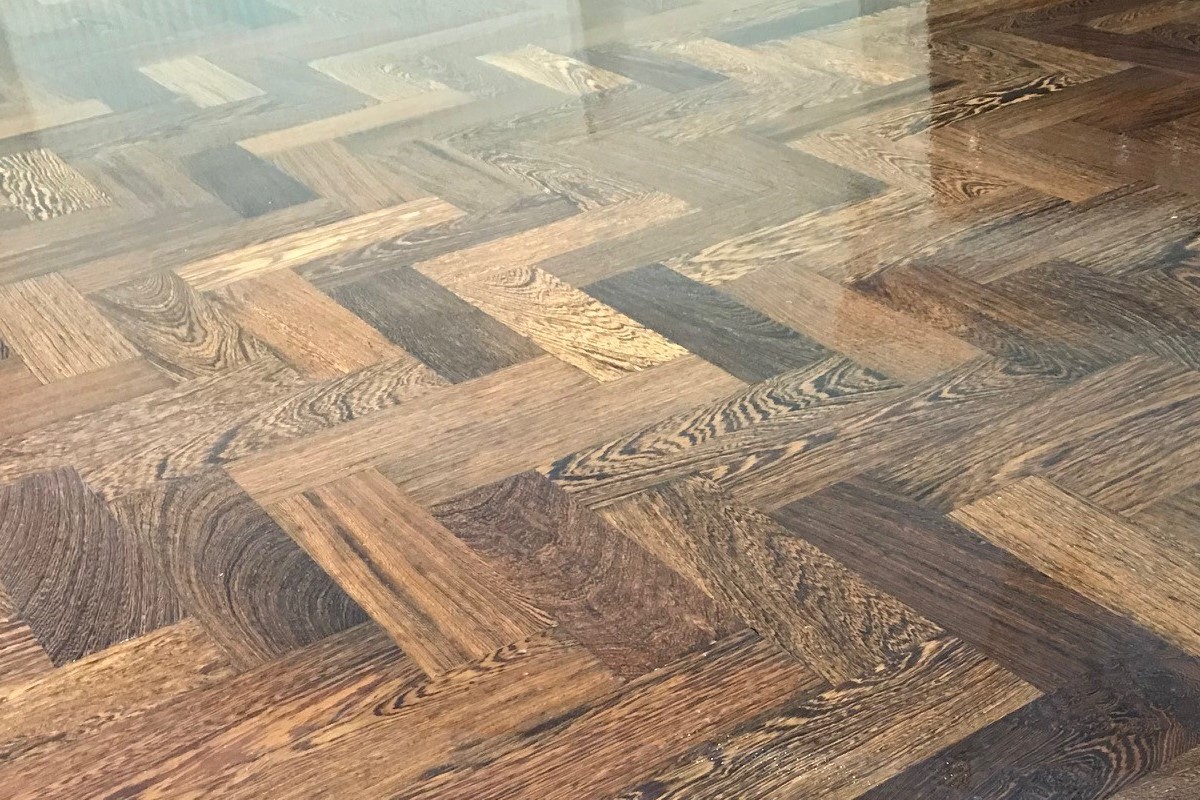
The finish also changes appearance. It can deepen the colour of the timber, highlight the grain, alter the sheen and influence how formal or natural the room feels. The same oak floor can look completely different under a high-gloss lacquer, a matt lacquer, a hardwax oil or a natural oil.
A finish provides some moisture resistance, but no wood floor finish makes timber waterproof. A good finish buys time to wipe up everyday spills. It does not remove the need for sensible care.
Finally, the finish shapes cleaning. Some floors are best maintained with dry cleaning and occasional damp cleaning. Others need finish-specific cleaners or periodic maintenance oil. The right finish should suit the way the room is actually used.
The Main Types Of Wood Floor Finish
Most homeowners are choosing from a small number of finish families: lacquer, hardwax oil, natural oil, UV oiled factory finishes and traditional wax. Each has strengths and limitations.
Lacquer And Water-Based Polyurethane Lacquer
Lacquer, sometimes called varnish, forms a protective film on top of the wood rather than soaking into it. Modern water-based polyurethane lacquers are common because they provide strong wear resistance, clear appearance options and relatively simple day-to-day cleaning.
Lacquered floors suit homeowners who want a practical surface, especially in busy living rooms, hallways and family spaces. The trade-off is repairability. Once a lacquer film wears through in traffic lanes, the floor normally needs sanding and recoating to restore an even appearance.
Natural Oil And Impregnating Oils
Natural oils soak into the timber rather than creating a surface film. The floor usually keeps a more open, natural feel, and the grain can remain very present underfoot. For homeowners who want the floor to feel like real timber rather than a sealed surface, oil can be very appealing.
Oil usually needs more regular care than lacquer. It may be easier to refresh locally in some situations, but the owner must be comfortable with maintenance. Natural appearance often brings greater responsibility.
Hardwax Oil
Hardwax oil sits between plain oil and lacquer in practical terms. It gives a natural appearance, but with more surface protection than many traditional oils. It is a popular choice where homeowners want a warmer, less plastic-looking finish without accepting the highest-maintenance option.
If you are weighing up hardwax oil versus lacquer, the key question is usually not which one is better, but which one matches your room use and maintenance expectations. Hardwax oil can often be more forgiving for localised maintenance, while lacquer can be simpler for day-to-day cleaning in busy homes.
UV Oiled Finishes
UV oiled finishes are commonly found on factory-finished boards. The oil is cured using ultraviolet light during production, giving a consistent finish before the flooring is installed. Homeowners are usually choosing this when buying pre-finished boards rather than when refinishing an existing floor on site.
For site-finished floors, the closer comparison is usually between lacquer, hardwax oil and natural oil. UV oil is useful to understand, but it is not normally the main decision on an older floor being sanded and finished in the home.
Beeswax
Beeswax is a traditional finish with a soft, warm appearance. It can suit period rooms, low-traffic spaces or floors where historical character matters more than maximum durability.
The limitation is protection. Beeswax generally requires more regular care and is not usually the most practical choice for a busy kitchen, hallway or family living room. It is a finish chosen for character, not convenience.
Wood Floor Finish Comparison
A comparison table helps simplify the decision. These are general tendencies rather than fixed rules, because product quality, preparation and room use all affect the final result.
| Finish | Appearance | Durability | Maintenance | Local repairability | Best suited to |
|---|---|---|---|---|---|
| Lacquer | Sealed, clean and consistent | High in domestic settings | Generally lower | Lower once the film is breached | Busy homes, hallways, living rooms |
| Hardwax oil | Natural with some surface protection | Good with suitable care | Moderate | Often good for small areas | Natural-looking floors, family homes with realistic maintenance |
| Natural oil | Very natural and open-looking | Moderate | Higher | Often good | Lower-traffic rooms, owners happy with care |
| UV oil | Factory-consistent | Good on pre-finished boards | Product-dependent | Depends on board system | Pre-finished engineered or solid boards |
| Beeswax | Soft, warm and traditional | Lower | Higher | Can be maintained locally | Period rooms, lower-traffic spaces |
How Long Do Different Floor Finishes Last?
There is no honest universal lifespan for a floor finish. The same product can last very differently in a quiet bedroom and a busy hallway used by children, visitors, pets and outdoor shoes. Traffic, cleaning habits, grit control, furniture movement, pets, room moisture and maintenance all affect longevity.
Lacquer tends to perform well until the protective film starts to wear thin in high-traffic areas. Once the film has worn through, the exposed timber becomes more vulnerable and a fuller refinishing process is usually needed.
Oiled and hardwax oiled floors tend to wear more gradually. They may lose richness or become dry-looking in traffic lanes, but they can often be refreshed before full sanding is needed. That only works if the floor is maintained before it becomes too worn.
Traditional wax finishes need the most ongoing attention. They can look beautiful, but they are not a low-maintenance route.
Choosing A Finish For Your Room And Lifestyle
The most useful question is simple: what does this floor need to cope with? A guest bedroom and a ground-floor hallway lead very different lives, so the finish should reflect the use of the room.
For high-traffic areas such as hallways, kitchens and family living rooms, durability and cleanability usually matter most. Lacquer is often a sensible option because it creates a hard surface film and keeps everyday cleaning straightforward. Hardwax oil can also work well when the homeowner wants a more natural look and accepts the need for appropriate maintenance.
In lower-traffic rooms, appearance can take more of the priority. A bedroom or study may suit a natural oil, hardwax oil or traditional finish where the feel of the timber matters more than maximum resistance to daily foot traffic.
Do not overlook moisture. Kitchens, utility rooms, doorways and dining spaces see spills. No finish removes the need to wipe up water promptly, but some finishes give more practical protection for rooms where occasional dampness is likely.
Appearance: Matt, Satin, Gloss And Coloured Finishes
The sheen level of a finish changes the room dramatically. The main options are matt, satin, semi-gloss and gloss.
Matt finishes are popular in modern homes because they make the timber feel natural and do not highlight every small mark. They usually disguise fine scratches, dust and footprints better than a very reflective surface.
Satin sits between matt and gloss. It gives a soft sheen that still feels natural while adding some warmth and depth. Many homeowners choose satin because it is a comfortable middle ground.
Gloss finishes are the most reflective. They can look striking in formal rooms, but they show dust, footprints and fine scratches more readily. Gloss does not automatically mean more durable. It mainly means more reflective.
Clear finishes allow the natural timber to dominate. Coloured finishes change the tone of the floor and should always be tested on a sample area. A small test patch will tell you more than a colour chart, especially on pine, pale boards or timber with old stains.
Which Finish Is Easiest To Maintain?
For many domestic homes, lacquer is generally considered one of the lowest-maintenance options because it forms a smooth protective surface and is straightforward to clean. That does not make it maintenance-free. It still needs grit control, felt pads, sensible cleaning and timely recoating when wear appears.
Hardwax oil is often a balanced option. It can look more natural than lacquer and may allow local maintenance in some situations, but it usually needs more finish-specific care.
Natural oil and beeswax sit further towards the traditional and natural end of the scale. They can be beautiful, but they require homeowners who are comfortable with more regular attention. The easiest finish is not always the best-looking finish for every room, and the best-looking finish is not always the easiest to maintain.
Why Floor Preparation Affects The Final Result
Choosing the right finish is only half the job. The condition of the timber beneath it determines how well any finish performs. A floor that has been properly sanded, cleaned and prepared will look better and last longer under every finish system.
Floor sanding is not just about removing the old coating. Sanding removes scratches, stains and surface damage, and it creates a smooth, even base for the new finish to bond to. If old oil or wax is left behind, lacquer may not adhere correctly. If the surface is left uneven, the finish will reflect the imperfections.
This is why professional preparation matters. The correct sanding sequence leaves the timber ready for the chosen finish without visible sanding marks, residue or uneven absorbency. In many cases, the preparation has more influence on the final result than the brand of finish used.
Our floor sanding service explains the preparation stage in more detail for homeowners who want to understand how sanding, cleaning and finishing work together.
Maintenance, Repair And Refinishing
Your choice of finish sets the maintenance routine for the life of the floor. This is where expectations need to be realistic, because no finish is maintenance-free.
Lacquered floors are usually the simplest day to day. They can often be cleaned with dry methods and occasional damp cleaning using a suitable product. However, when a lacquered floor starts to wear through in busy areas, the worn film cannot simply be oiled back to health. The floor usually needs sanding and recoating to restore a consistent surface.
Oiled and hardwax oiled floors work differently. Because the finish sits in or partly within the wood, traffic gradually wears the protection in patches. These floors can often be refreshed with a maintenance coat, and small damaged areas may be easier to address locally.
The point is not that one system is easier than the other. It is that the finish should match the level of care you are prepared to give. A homeowner who wants to sweep, clean and move on may prefer lacquer. A homeowner who values a natural surface and accepts periodic care may prefer oil or hardwax oil. The floor refinishing service page explains how refinishing renews the protective surface when that time comes.
Older Floors And Restoration Projects
Restoring an older wooden floor brings additional considerations. The timber may have been down for decades, it may have been finished several times, and it may include repairs, spliced boards, old stains, colour variation or worn grain.
An older floor that has been carefully prepared will perform better under any finish. The preparation affects how the finish bonds and how even the final appearance becomes, especially where old adhesive, old stain or former coatings have left a trace.
For some restoration projects, an oiled finish is worth considering because it can be refreshed in place and may suit the character of older timber. But there is no rule that says old floors must be oiled. A sound, well-prepared older floor can take a modern lacquer perfectly well if the desired result is a tougher, cleaner-maintenance surface.
For homeowners restoring older boards, parquet or repaired timber, the wood floor restoration process should be considered alongside finish choice rather than after it.
Common Misconceptions About Wood Floor Finishes
Many poor finish choices start with assumptions that are only partly true.
- Lacquer is maintenance-free. It is lower maintenance, not maintenance-free.
- Oil is always the best choice for natural floors. Oil often looks natural, but it still needs the right care and may not suit every busy room.
- Gloss is more durable. Gloss is more reflective; durability depends on the product and preparation.
- Matt is weaker. Matt describes sheen, not automatically strength.
- One finish suits every room. Room use should influence finish choice.
- A finish prevents all scratches. No finish makes a wooden floor scratch-proof.
- Dark floors hide everything. Dark floors can still show dust, footprints and scratches depending on light and sheen.
- Natural finishes need no maintenance. They often need more attention, not less.
A Simple Way To Make Your Decision
If you are still unsure, work through a short set of practical questions. The answers usually point towards the right family of finishes without needing to understand every manufacturer specification.
| Question | What the answer tells you |
|---|---|
| How much traffic will the room receive? | Busy rooms usually need stronger, easier-cleaning finishes. |
| How natural do you want the floor to look and feel? | Oil and hardwax oil usually feel more natural than film-forming lacquer. |
| How much maintenance are you willing to do? | Lacquer is generally lower maintenance; oil and wax need more care. |
| Do you expect localised wear or damage? | Oiled and hardwax oiled floors may be easier to refresh locally. |
| What sheen do you prefer? | Matt hides minor marks; satin balances warmth and practicality; gloss is more reflective. |
| Is the floor old, repaired or characterful? | Restoration goals may matter as much as product type. |
| Is the room at risk of moisture or spills? | Choose a finish and maintenance routine that suit the room conditions. |
You do not need to memorise product names. If you can answer these questions honestly, you will usually know whether to focus on lacquer, hardwax oil, natural oil or a more traditional finish like beeswax.
Balancing Appearance, Durability And Maintenance
Most finish decisions are a trade-off between three things: appearance, durability and maintenance. It is rare for one finish to be the strongest, most natural-looking and lowest-maintenance option at the same time.
| Homeowner priority | Likely direction | Important expectation |
|---|---|---|
| Lowest day-to-day maintenance | Lacquer | Still needs sensible cleaning and recoating before failure. |
| Natural look with practical protection | Hardwax oil | Needs compatible cleaning and periodic maintenance. |
| Very traditional or characterful appearance | Natural oil or wax | Usually higher maintenance. |
| Busy family home | Lacquer or hardwax oil | No finish is completely scratch-proof. |
| Older restored floor | Depends on timber and goals | Preparation and realistic expectations matter. |
| Local repairability | Oil or hardwax oil | Repairs may still be visible depending on timber and finish. |
Final Thoughts
The best finish for a wooden floor is not simply the toughest product or the most natural-looking surface. It is the finish that suits the room, the timber, the homeowner and the maintenance routine that will realistically follow.
Lacquer is often practical for busy homes. Hardwax oil gives a natural appearance with useful protection. Natural oil and beeswax can suit characterful rooms when owners accept more maintenance. Matt, satin and gloss change how wear and light are perceived, not just how shiny the floor looks.
Choosing the right finish is one of the most important parts of a refinishing project. A well-chosen finish protects the work already done through sanding and helps the floor perform in real life, not just on the day it is completed.
Frequently Asked Questions
What is the most durable finish for wooden floors?
For many domestic floors, modern polyurethane lacquer is one of the strongest practical options. Factory-applied finishes can also be very durable. Durability still depends on preparation, traffic, room use and maintenance, so no finish should be treated as indestructible.
Is hardwax oil better than lacquer?
Not universally. Hardwax oil often gives a more natural appearance and can be easier to maintain locally in some situations. Lacquer is usually simpler for day-to-day cleaning and can be very practical in busy homes. The better choice depends on the room and the maintenance you are prepared to do.
What is the easiest floor finish to maintain?
Lacquer is generally one of the easiest finishes to maintain in everyday domestic use because it forms a smooth protective film. It still needs proper cleaning, grit control, felt pads and timely recoating when the finish begins to wear.
Should I choose matt or satin finish?
Matt usually gives a more natural look and hides minor marks well. Satin gives a soft sheen and a little more visual warmth. Both can be practical choices. Gloss is more reflective and can show dust and scratches more readily.
Can floor finishes be changed later?
Yes, but changing from oil to lacquer, or lacquer to oil, normally requires sanding back to clean timber first. A new finish needs the right prepared surface to bond or penetrate properly.
Which finish is best for a busy family home?
A durable lacquer or suitable hardwax oil is often a sensible choice for a busy family home. Lacquer is usually easier to clean, while hardwax oil may appeal if a more natural appearance is important. Neither is scratch-proof, so protection and aftercare still matter.
How should I look after the finish once it has been applied?
Aftercare depends on the finish type, traffic and room use. A newly restored wooden floor should be protected from excess water, grit, dragging furniture and unsuitable cleaning products. The right cleaning routine helps the finish last longer.
Recommended Posts
How Does Dust-Controlled Floor Sanding Work?
08/08/2026
Is Parquet Floor Restoration Worth It?
06/08/2026
Testimonial Five
See more of our customer reviews at Checkatrade.com
YOU’RE IN GOOD HANDS




Contact our local carpet cleaners and local floor sanders near you to discover more about a full selection of floor restoration services.
Contact Us