
Is Parquet Floor Restoration Worth It?

by Darren Admin
Is Parquet Floor Restoration Worth It?
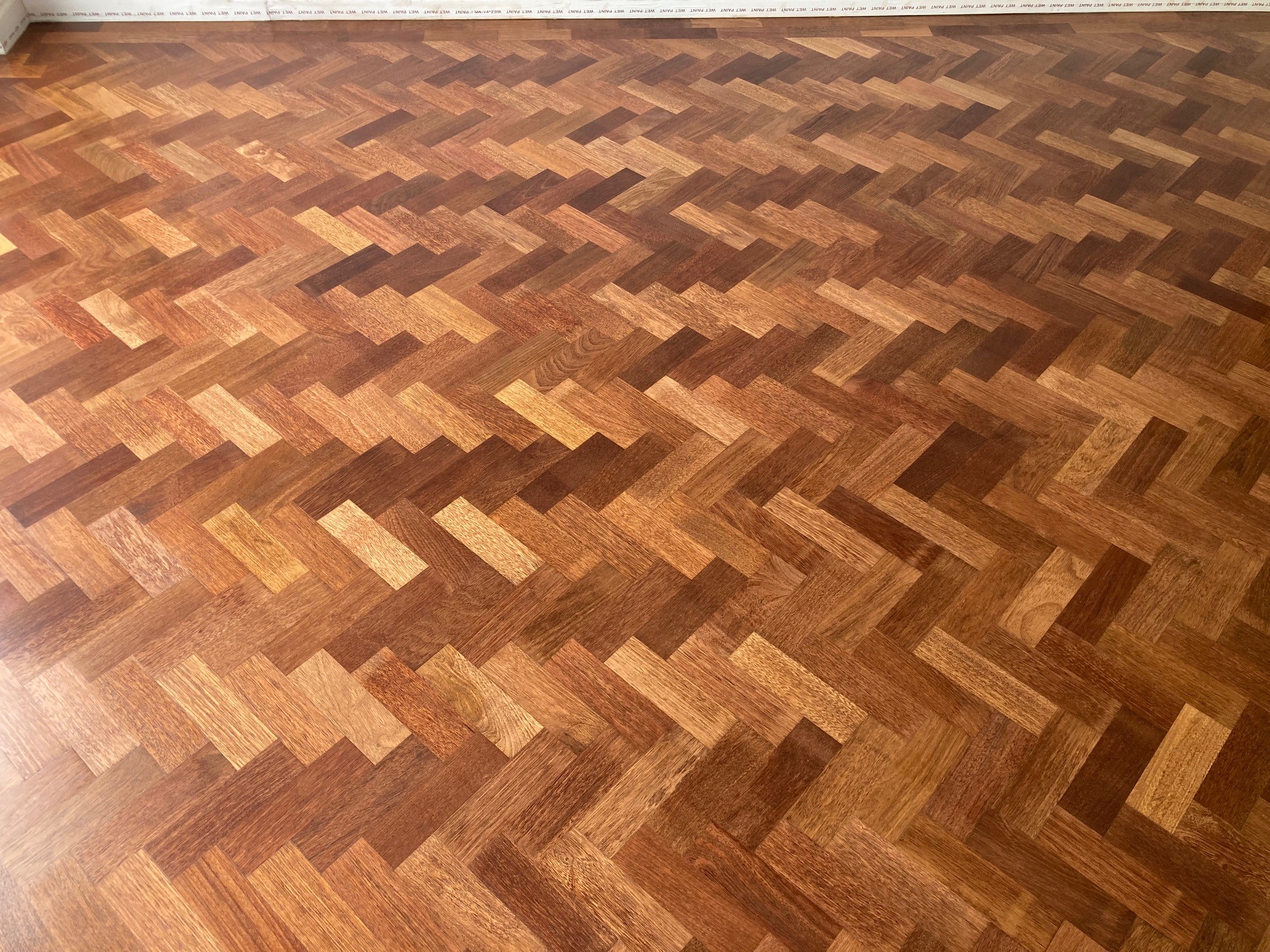
Parquet flooring has a presence that plain timber boards rarely match. The geometric pattern, the small blocks and the warmth of the wood can give a room a sense of quality that is hard to recreate with modern sheet or click-together flooring. When parquet is in good condition, it is easy to see why so many homeowners want to keep it.
The harder question comes when the floor starts to look tired. Scratches appear, the old finish turns dull, stains settle into the grain, and individual blocks may work loose or go missing. At that point many homeowners ask the same question: is parquet floor restoration worth it, or would replacement be the more sensible choice?
The honest answer is that parquet restoration is often worth considering, but it is not automatic. The decision depends on the condition of the timber, the stability of the blocks, the amount of damage, moisture history, thickness remaining for sanding and what you want from the room. This article is designed to help you make that decision clearly, without assuming that every floor should be restored or every worn floor should be replaced.
The Short Answer: Is Parquet Floor Restoration Worth It?
In many cases, yes. Parquet floor restoration is often worth it when the floor is structurally sound, most of the original blocks remain, and the surface wear is mainly cosmetic. A floor that looks dull, scratched or stained may still have plenty of life left in it once it has been repaired, sanded and refinished properly.
The important point is that appearance alone should not decide the answer. A floor can look terrible but still be a strong restoration candidate. Equally, a floor can look fairly complete from above but have widespread loose blocks, moisture damage or a weak subfloor underneath. The right decision comes from assessment, not guesswork.
For example, a hallway with worn finish, a few loose blocks and one small missing section may be very suitable for restoration. A room with active damp, widespread adhesive failure and large areas of rotten timber needs a deeper investigation before anyone promises a good result.
Why So Many Parquet Floors Get Replaced Unnecessarily
Many parquet floors are replaced because they are judged visually rather than structurally. Old finish can make a floor look much worse than it is. A dark, uneven coating may hide good timber underneath. Carpet adhesive, paint marks, surface scratches and old polish build-up can all make a floor look beyond saving when the timber itself is still sound.
Missing or loose blocks also worry homeowners, but these issues do not automatically mean the whole floor has failed. Localised repairs are often part of normal restoration work. What matters is whether the repair areas are limited and whether the floor can be made stable before sanding.
Age is another common misconception. Older parquet is not automatically worse than newer flooring. In many period properties, the original blocks are solid hardwood and can respond very well to careful restoration. The adhesive may have failed before the timber has.
What Professionals Look At Before Recommending Restoration
A professional assessment looks beyond the top surface. The aim is to understand whether the parquet can be made stable, sanded safely and finished in a way that will last.
Condition of the timber
The first question is whether the wood itself is sound. Scratches, worn coating and light staining are usually surface problems. Soft, crumbling or rotten timber is more serious and may require replacement rather than sanding.
Condition of the pattern
Parquet depends on its pattern. If the pattern is mostly intact, restoration is usually more realistic. If large areas are missing or heavily altered, the work becomes more involved because the pattern may need rebuilding.
Loose or missing blocks
Loose blocks need to be stabilised before sanding. In many cases, missing parquet blocks can be replaced, but matching, block size and surrounding stability all affect the final result.
Water damage
Water damage needs careful judgement. Old staining is not always a deal-breaker, but ongoing damp, swelling, cupping or soft timber can change the recommendation completely.
Subfloor stability
A parquet floor is only as reliable as the surface beneath it. If the subfloor is moving, uneven or damp, restoring the visible timber without correcting the base may only produce a short-term improvement.
Previous repairs
Old repairs can be helpful or problematic. A well-matched previous repair may be fine. A poor repair with wrong-sized blocks, unsuitable adhesive or a visible change in pattern may need correcting as part of the restoration.
Signs A Parquet Floor Is Usually Worth Restoring
These signs normally make restoration worth investigating before replacement is considered.
- Most of the original parquet blocks are still present.
- The pattern remains largely intact across the room.
- Missing sections are limited rather than widespread.
- Loose blocks are localised and can be identified clearly.
- The timber feels firm rather than soft, rotten or crumbling.
- The subfloor appears stable underfoot.
- There is no serious ongoing moisture problem.
- Previous repairs are limited and do not dominate the floor.
A floor does not need to be perfect to be restorable. Many parquet floors worth saving have small gaps, dull finish, old marks or a few problem blocks. The question is whether the structure can be made stable and whether the finished result will meet realistic expectations.
Signs Restoration May Be More Complex
The following signs do not automatically rule out restoration, but they do mean the floor needs a more careful assessment.
- Extensive water damage or a known ongoing damp problem.
- Large sections of missing parquet.
- Several separate areas of loose or hollow-sounding blocks.
- Widespread adhesive failure beneath the blocks.
- Noticeable subfloor movement or flexing.
- Repeated failed repairs in the same areas.
- Severe timber deterioration, distortion or rot.
These signs suggest the decision is no longer just about making the surface look better. The cause of the damage must be understood first. If water is still entering the floor, or the subfloor remains unstable, restoring the surface without solving the cause is unlikely to produce a lasting result.
Parquet Restoration Vs Parquet Replacement
Restoration and replacement are different decisions. Neither is automatically right. The best choice depends on what you want to preserve, how damaged the floor is and what level of disruption you are prepared for.
| Factor | Restoration | Replacement |
|---|---|---|
| Original floor retained | Yes | No |
| Character preserved | Yes, including age and natural variation | Usually not in the same way |
| Disruption | Often lower when the floor is suitable | Usually higher due to removal and installation |
| Historic value | Retained where the original floor remains | Lost when the original floor is removed |
| Repair matching | Sometimes required | Not usually relevant with a new floor |
| Material waste | Lower because existing timber is reused | Higher because the old floor is removed |
| Outcome depends on condition | Yes | Yes |
Restoration is usually strongest where the original floor has quality, character and enough structural integrity to justify the work. Replacement becomes more sensible where the existing floor cannot be stabilised or where the repair work would exceed what the homeowner wants to invest.
When A Few Repairs Are Better Than Replacement
Some floors look worse than they are because the eye is drawn to a small number of obvious defects. A few missing blocks, several loose blocks, a stained doorway or a worn traffic route can make the whole room look neglected.
A practical example would be a parquet floor with five loose blocks and two missing blocks, but a stable subfloor and sound timber elsewhere. In that situation, targeted parquet floor repairs followed by sanding and refinishing may give a much better result than replacing the floor.
Contrast that with a floor where the blocks are moving across the whole room, old adhesive has failed widely and moisture is still present. That floor may still be restorable, but it needs a wider restoration assessment rather than a simple patch repair.
When Restoration Often Delivers The Biggest Improvement
Restoration often delivers the biggest visual improvement when the main problem is surface wear rather than structural failure. Dull finish, scratches, scuffs, old polish build-up, worn walkways and uneven colour can make parquet look tired while the timber underneath remains perfectly usable.
Professional parquet floor sanding and restoration can remove old coatings, improve the surface, blend repairs and allow a new finish to protect the wood. The transformation can be significant, but it should still be described honestly: restoration improves and renews the floor; it does not turn old timber into brand-new timber.
What Restoration Cannot Fix
A trustworthy restoration decision includes knowing the limits. Sanding and finishing cannot fix every problem.
- Active moisture problems must be resolved before restoration.
- Rotten or crumbling timber may need replacement.
- Major subfloor defects may require separate repair work.
- Some deep historic stains may remain visible after sanding.
- A floor that has been sanded too many times may not be safe to sand again.
- Poorly matched replacement blocks may still show some variation after finishing.
This does not make restoration a poor option. It simply means the expected result should be realistic. The best restorations are not based on promising perfection; they are based on making the floor stable, attractive and suitable for everyday use.
Financial Considerations
Cost matters, but it should be compared fairly. Restoring original parquet is not the same as installing a cheap modern covering. The two options produce a different look, a different feel and a different long-term outcome.
Some alternative floor coverings may have lower upfront costs, but they do not preserve the original timber or the period character of the room. On the other hand, if the parquet needs extensive structural work, moisture correction and large-scale block replacement, the restoration cost may become substantial.
A sensible decision compares the full scope of each option: repair work, sanding, finishing, replacement materials, removal of the old floor, disruption, expected lifespan and the value you place on keeping the original parquet.
Questions To Ask Before Choosing Restoration Or Replacement
- What is actually causing the damage: wear, movement, moisture or previous repair work?
- Is the floor structurally sound enough to sand and finish?
- How much original parquet remains?
- Are missing or damaged blocks limited to small areas?
- Can matching or close-matching blocks be sourced if needed?
- Is the subfloor dry and stable?
- Am I expecting a restored original floor or a perfect new-looking surface?
- Would repair and restoration solve the problem, or only improve the appearance temporarily?
These questions help separate appearance problems from performance problems. A tired surface may restore well. Movement, damp or structural weakness needs more investigation before a finish is applied.
Common Homeowner Mistakes
- Judging the floor before the old finish has been properly assessed.
- Assuming replacement is the only option because the floor looks worn.
- Ignoring loose blocks and hoping sanding will solve movement.
- Delaying repairs after water damage.
- Assuming missing blocks mean the entire floor must be lifted.
- Comparing restoration with very cheap coverings as if the outcomes are the same.
- Expecting every repair and historic mark to disappear completely.
Most of these mistakes come from making the decision too early. The floor should be inspected before deciding whether restoration, repair or replacement gives the best long-term result.
Common Misconceptions About Parquet Restoration
Old parquet is beyond saving
Age alone does not decide the answer. Many older parquet floors are made from good-quality timber and can still be restored if the structure is sound.
Replacement is always better
Replacement gives a new surface, but it also removes the original floor. Where the existing parquet is sound, restoration may preserve more character and create less disruption.
Repairs always show
Some repairs remain visible on close inspection, especially on older timber, but well-planned repairs can often blend effectively during sanding and finishing.
Missing blocks mean a new floor is needed
Not usually. Missing sections can often be repaired if suitable replacement blocks are available and the surrounding floor is stable.
Restoration is only cosmetic
Proper restoration is not just about sanding the surface. It can include stabilising loose blocks, replacing damaged sections and preparing the floor before finishing.
Parquet can only be sanded once
Some parquet floors can be sanded more than once, but only if there is enough timber remaining. Thickness and previous sanding history must be checked.
What A Restored Parquet Floor Typically Looks Like
A well-restored parquet floor should look cleaner, more even and better protected. The pattern should read clearly again, the surface should feel more consistent underfoot and the finish should suit how the room is used.
It should not necessarily look like a brand-new factory floor. Natural variation, age, grain differences and some historic marks may remain. For many homeowners, that is part of the appeal. The aim is a stable, attractive floor with character, not an artificial-looking surface with every trace of age removed.
Realistic Expectations After Restoration
The best restoration outcomes come from clear expectations before work begins. Repairs may not be invisible. Replacement blocks may vary slightly. Some old stains may reduce rather than disappear. Seasonal movement may still need to be respected, especially in older properties.
Stability matters more than perfection. A floor that has been properly repaired, sanded and finished will usually serve the home better than a cosmetically improved floor where movement, damp or missing sections were ignored.
Final Thoughts
Parquet floor restoration is often worth it when the floor is structurally sound, most original blocks remain and the problems are mainly wear, localised damage or failed finish. It can preserve character, reduce unnecessary replacement and give an older floor many more years of useful life.
Restoration may be more complex where there is water damage, widespread block movement, significant missing sections or subfloor problems. Those issues do not automatically mean the floor is beyond saving, but they do mean the decision should be based on a proper assessment.
If you are deciding between restoration and replacement, start with the condition of the floor, not just the appearance. A tired parquet floor may still be one of the best features in the room once the right repair and restoration work has been carried out.
Frequently Asked Questions
Is parquet floor restoration worth it?
Often, yes. Parquet restoration is usually worth considering when the floor is structurally sound, most original blocks remain and the damage is mainly surface wear or localised repair work.
Is it cheaper to restore or replace parquet flooring?
It depends on the condition of the floor and the quality of the replacement option. Restoration may be more cost-effective over time when the original floor is sound, but extensive repairs can increase the cost.
Can damaged parquet flooring be restored?
Many damaged parquet floors can be restored if the timber and subfloor are sound. Loose blocks, missing blocks and surface wear can often be addressed before sanding and finishing.
Does missing parquet mean replacement?
No. A parquet floor with missing blocks can often still be restored if suitable replacement blocks can be sourced and the surrounding floor remains stable.
Can loose parquet blocks be repaired?
Yes. Loose blocks are commonly re-secured before sanding. Loose parquet should be repaired before sanding so the floor is stable before the sanding machine is used.
How do professionals decide whether parquet can be restored?
Professionals assess the timber, pattern, block stability, moisture history, subfloor condition, previous sanding depth and the amount of repair work required.
What if my parquet floor has water damage?
Water damage needs assessment. Old staining may not rule out restoration, but active moisture, swelling, rot or subfloor damp must be investigated before restoration is planned.
How long can a restored parquet floor last?
A properly repaired and finished parquet floor can give many years of use, but longevity depends on the condition of the floor, the finish chosen, maintenance and how heavily the room is used.
Recommended Posts
How Does Dust-Controlled Floor Sanding Work?
08/08/2026
Can Missing Parquet Blocks Be Replaced?
06/08/2026
Testimonial Five
See more of our customer reviews at Checkatrade.com
YOU’RE IN GOOD HANDS






Contact our local carpet cleaners and local floor sanders near you to discover more about a full selection of floor restoration services.
Contact Us