
How Many Times Can A Parquet Floor Be Sanded?

by Darren Admin
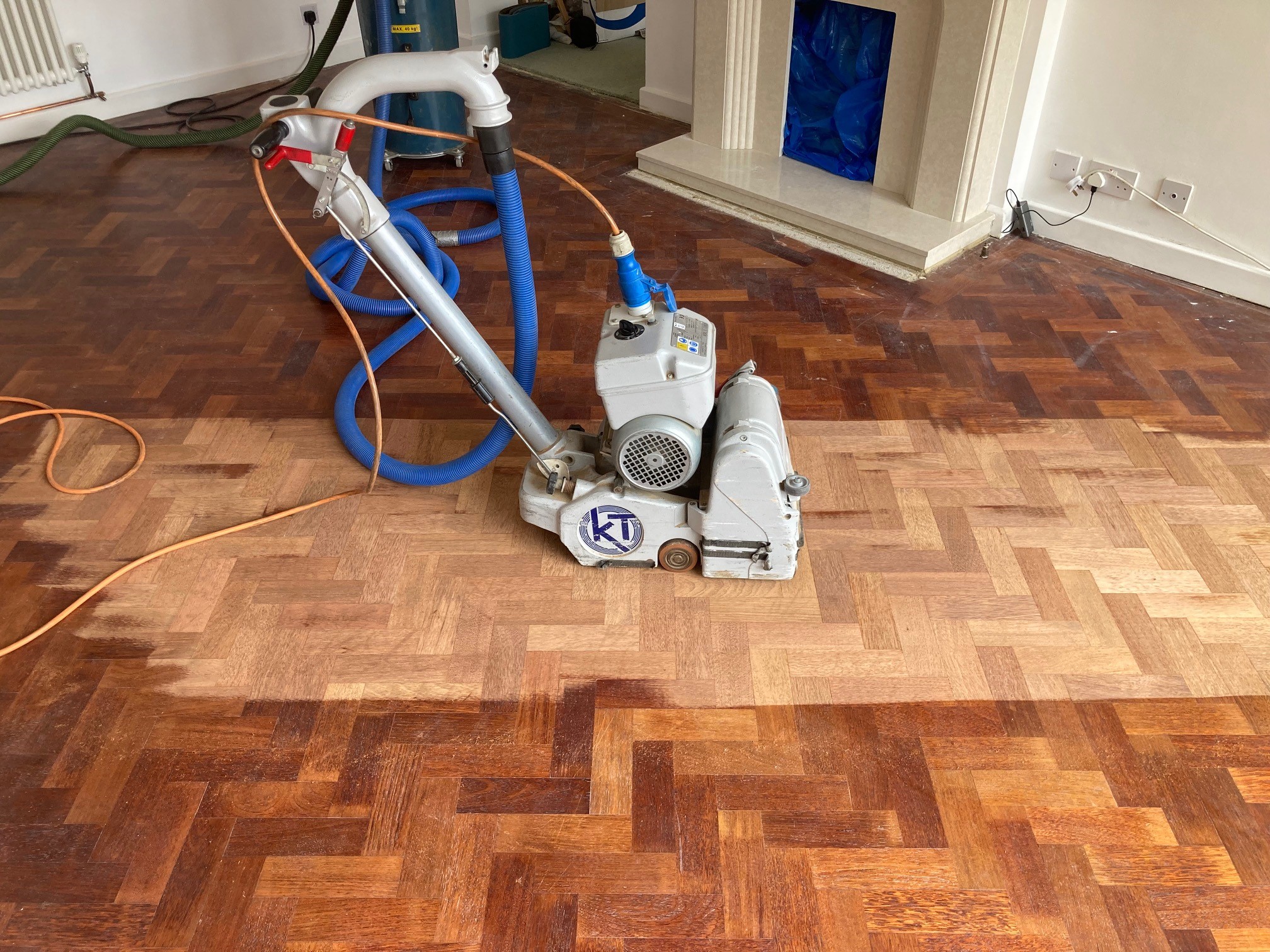
If you own a parquet floor, the question of how many times it can be sanded usually comes up when the finish starts to look tired, the scratches become more visible, or someone has warned you that the floor may already have been sanded too many times. It is a sensible question, because parquet can often be restored beautifully, but it cannot be sanded indefinitely.
The honest answer is that there is no single number that applies to every parquet floor. Some floors have enough usable timber for another sanding. Others are better suited to lighter refinishing, repair-first restoration, or in severe cases replacement. The right decision depends on the construction of the floor, the remaining usable timber, previous sanding history, block stability and the condition of the surface.
This guide explains how those factors work together so you can understand whether your parquet floor is likely to be a good candidate for sanding, whether repairs are needed first, or whether another approach may be safer.
Why There Is No Fixed Number
Parquet floors are not all built the same. Some are made from solid timber blocks. Others are engineered, with a thinner real-wood surface bonded to a supporting core. Some have been sanded carefully in the past, while others may have been sanded aggressively or repaired several times. Those differences make blanket answers unreliable.
The phrase ‘how many times can parquet be sanded?’ sounds simple, but the real question is whether enough sound timber remains to allow the floor to be sanded safely without weakening the blocks, exposing joints, or damaging the structure of the floor.
A never-sanded solid parquet floor will usually have more future sanding potential than a thin engineered parquet floor that has already been heavily sanded. A stable floor with secure blocks is also different from a floor with loose blocks, missing sections or historic water damage.
| Floor situation | Future sanding potential | What to consider |
|---|---|---|
| Never-sanded solid parquet | Often good | Still needs assessment of block thickness, stability and condition |
| Lightly sanded parquet | Often possible | Previous sanding quality and remaining usable timber matter |
| Parquet sanded several times | Variable | The floor may have limited sanding life remaining |
| Loose parquet blocks | Repairs first | Movement must be stabilised before sanding |
| Missing parquet blocks | Repairs first | Replacement blocks may need fitting before surface work |
| Water-damaged parquet | Depends on severity | Surface staining is different from soft, swollen or unstable timber |
| Heavy previous repairs | Variable | Poor repairs may need correcting before sanding |
| Surface wear only | May not need full sanding | A lighter refinishing approach may sometimes be enough |
What Determines Whether A Parquet Floor Can Be Sanded Again?
Remaining usable timber
Sanding removes a small amount of timber each time. That is why the remaining usable timber above the joints, edges and structure of the block is the most important factor. A floor can look solid from above but still have limited sanding life left if it has been sanded repeatedly or unevenly in the past.
For homeowners, the practical point is simple: do not judge sanding potential from surface appearance alone. A professional assessment can identify whether there is enough timber to sand safely without weakening the blocks or exposing the construction beneath.
Previous sanding history
Every sanding affects future options. A parquet floor that has been lightly sanded once may still have good restoration potential. A floor that has been heavily sanded more than once may need much more caution. The problem is that homeowners do not always know what happened before they bought the property.
If the sanding history is unknown, assessment becomes even more important. Previous sanding marks, flattened edges, exposed joints, uneven levels and thin-looking blocks can all provide clues, but they are not a substitute for proper inspection.
Condition of the blocks
Secure, sound blocks are much better candidates for sanding than cracked, loose, split or unstable blocks. Parquet is made from many individual pieces, so local problems can affect the result across the whole floor.
If a few blocks are loose, the floor may still be very restorable. If large sections are moving, the focus may shift from sanding to repair and stabilisation first.
Repairs and replacement blocks
Previous repairs can either help or complicate future sanding. Well-fitted repairs can often be blended during sanding and finishing. Poor patches, mismatched blocks or uneven sections may need correcting before sanding begins.
Water damage
Water can affect parquet in several ways. It may stain the surface, loosen adhesive, swell the blocks, distort the pattern or soften the timber. Surface marks may sometimes improve during sanding, but deeper moisture damage usually needs repairs or stabilisation first.
Structural stability
A parquet floor should be stable before sanding. Movement underfoot, hollow-sounding areas, lifting blocks or repeated adhesive failure can all affect whether sanding is safe and whether the finished floor will last.
Why Previous Sanding Matters
Previous sanding matters because each pass removes some of the usable timber. A careful sanding removes only what is necessary to remove the old finish and prepare the surface. An aggressive sanding can take away too much material and shorten the floor’s future life.
This is especially important with parquet because the floor is made from individual blocks, often with changing grain directions and patterned layouts. The sanding must be controlled enough to refresh the floor without flattening the pattern or weakening the blocks.
Professional parquet floor sanding and restoration should always include an assessment of the floor before sanding begins. The aim is not simply to get the floor back to bare wood, but to remove only what is necessary while protecting the structure and appearance of the parquet.
Signs A Parquet Floor May Still Be Suitable For Sanding
The following signs are positive indicators, although they do not guarantee that sanding is safe.
- Most blocks remain secure and do not move underfoot.
- The floor feels firm rather than springy or hollow across large areas.
- Wear appears mainly surface-level, such as tired finish, light scratches or dullness.
- Previous sanding seems limited rather than heavy or uneven.
- Repairs are local rather than widespread.
- There is no major water damage, soft timber or distorted pattern.
- The parquet pattern still looks clear and well-defined.
If several of these points apply, the floor may be worth assessing for sanding or restoration. The final decision should still be based on the actual condition of the floor, not guesswork.
Signs Sanding May Not Be The Best Option
Sanding is not always the safest or most sensible option. In some cases, the floor needs repairs before sanding. In others, a lighter treatment may be better. Occasionally, replacement becomes more realistic.
- Large areas of parquet blocks are loose or lifting.
- The floor has been sanded heavily in the past.
- The pattern looks flattened, uneven or thinned in places.
- There is widespread water damage or soft timber.
- Many blocks are missing or badly damaged.
- Previous repairs are unstable or poorly matched.
- The floor moves underfoot rather than feeling firmly bonded.
These warning signs do not automatically mean replacement is required. They mean the floor should be assessed before sanding is planned. Repairs, partial block replacement, stabilisation or refinishing may all be more appropriate starting points.
Can Damaged Parquet Still Be Restored?
Many damaged parquet floors can still be restored, especially when the damage is local rather than widespread. Loose blocks can often be re-secured, missing blocks can sometimes be replaced, and worn finishes can often be renewed once the floor is stable.
Where the problem goes beyond the surface, wider wood floor restoration may be needed. This might include stabilising loose areas, correcting previous repairs, replacing damaged blocks, sanding the floor carefully and then applying a suitable finish.
The important distinction is that restoration does not always start with sanding. If the blocks are moving or sections are missing, the floor needs to be made sound before the surface is refined.
Common Parquet Problems That Affect Sanding Decisions
Loose blocks
Loose blocks should normally be repaired before sanding. Sanding an unstable parquet floor can worsen movement, disturb the pattern or create a poor finish. If the article ‘Should loose parquet be repaired before sanding?’ is published, it should be linked from this topic rather than forcing the explanation into every parquet article.
Missing blocks
Missing blocks leave the floor incomplete and can affect the sanding result. Replacement blocks may need to be fitted before sanding so the floor can be treated as one surface.
Old repairs
Old repairs can be helpful or problematic depending on how they were carried out. Uneven, unstable or mismatched repairs may need correcting before sanding, especially if the surrounding floor is otherwise worth saving.
Gaps between blocks
Some gaps can be improved, but gap filling must respect natural movement. Filling every gap without assessing block stability can lead to brittle filler lines that crack later.
Water damage
Water damage can be surface-level or structural. Light marking may improve during sanding, but swelling, adhesive failure, cupping or soft timber usually need repair-led assessment first.
Where blocks are loose, missing or damaged, parquet floor repairs should be considered before sanding is booked. Repair work helps create the stable base needed for a better final result.
When Refinishing May Be Better Than Full Sanding
Not every tired parquet floor needs full sanding. If the blocks are secure and the issue is mainly a worn or dull finish, a lighter floor refinishing approach may sometimes be enough to refresh the floor without removing as much timber.
This can be especially useful for floors that are approaching their sanding limit but are still structurally sound. However, refinishing is not a way to hide loose blocks, missing sections, deep damage or structural movement. If the floor has deeper problems, those issues need addressing first.
The decision is not simply sanding versus doing nothing. The real options may include maintenance, refinishing, repairs, restoration, or replacement, depending on what the floor actually needs.
Examples Of Different Parquet Floors
A well-maintained herringbone parquet floor with worn lacquer but secure blocks may still be a good sanding or refinishing candidate. The decision depends on how deep the wear is and how much usable timber remains.
An old parquet floor discovered under carpet may look dull, dirty and neglected, but if the blocks are secure and the timber is sound, restoration may still be very realistic.
A parquet floor near patio doors with historic water damage needs a different level of caution. Moisture can affect the adhesive and block shape, so the floor should be checked before any sanding decision is made.
A floor that has been aggressively sanded in the past may have limited future sanding potential even if it still looks flat. Appearance alone does not reveal how much usable timber is left.
A parquet floor with missing blocks after alterations may still be restorable if replacement blocks can be fitted and blended, but expectations should be realistic. Exact matches are not always possible on older floors.
Could Your Parquet Floor Be Sanded Again?
Use this checklist as a practical starting point before booking sanding work.
- The floor feels firm underfoot.
- Most blocks are securely fixed.
- Wear appears mostly surface-level.
- The pattern still looks even and well-defined.
- Repairs are limited to small areas.
- There are no soft, damp or swollen sections.
- Previous sanding history is unknown or appears limited.
- The floor has not been visibly flattened by heavy past sanding.
If several of these signs apply, the floor may be a good candidate for assessment. If several warning signs are present, repairs or a lighter treatment may need to be considered before full sanding.
Common Misconceptions About Sanding Parquet
Parquet can only be sanded once
This is not always true. Some parquet floors can be sanded more than once, provided enough usable timber remains and the blocks are stable.
Every parquet floor can be sanded forever
This is also false. Every sanding removes material. Eventually a floor can reach a point where further sanding is not safe or sensible.
Old parquet is automatically beyond saving
Age alone does not decide whether a parquet floor can be restored. Some older parquet floors were made from high-quality timber and may still have restoration potential.
Loose blocks mean the whole floor must be replaced
Loose blocks can often be repaired or re-secured. Replacement is usually considered only when the damage is widespread, the adhesive has failed across large areas, or the floor is no longer economical to restore.
A new finish will hide everything
A finish can improve appearance and protection, but it will not solve loose blocks, missing sections, deep water damage or structural movement.
What A Professional Assessment Should Consider
A good assessment looks beyond the surface. It considers whether the floor is solid or engineered, how secure the blocks are, whether there are hollow areas, how much previous sanding may have taken place, whether repairs are needed, and whether the current damage is cosmetic or structural.
The assessment should also consider whether sanding is actually the best treatment. In some cases, lighter refinishing protects the floor better than a full sanding. In others, repairs and stabilisation are required before any surface work begins.
The purpose of assessment is to avoid unnecessary sanding and protect the future life of the parquet floor. Good advice should help you choose the right level of work, not automatically push you towards the most invasive option.
Final Thoughts
There is no fixed number of times a parquet floor can be sanded. The answer depends on the individual floor, not a universal rule. Remaining usable timber, previous sanding, block stability, water damage and repair history all influence the decision.
Many parquet floors still have excellent restoration potential, even when they look tired. Others need repairs first, may only suit refinishing, or may be too thin or unstable for another full sanding.
If your parquet floor is worn, scratched, dull or uneven, the safest next step is an informed assessment. That will show whether sanding, refinishing, repairs or wider restoration is the best route for preserving the floor.
Frequently Asked Questions
How many times can parquet flooring be sanded?
There is no fixed number. Some parquet floors can be sanded more than once, while others should not be sanded again. Suitability depends on the remaining usable timber, previous sanding history, construction of the blocks and the condition of the floor.
Can old parquet floors still be sanded?
Yes, many older parquet floors can still be sanded or restored if the blocks are stable and enough usable timber remains. Age alone is not the deciding factor. Previous sanding, moisture damage, adhesive condition and block stability matter more.
Does previous sanding affect restoration options?
Yes. Previous sanding removes some of the usable timber. A floor that has been sanded carefully may still have good restoration potential, while a floor that has been heavily sanded may have limited future options.
Can loose parquet blocks be repaired before sanding?
Often, yes. Loose parquet blocks should normally be re-secured before sanding begins. Sanding over moving blocks can worsen instability and affect the final finish. The scale of the loose area determines how involved the repair work may be.
Can damaged parquet still be restored?
In many cases, yes. Damaged parquet may need block repairs, replacement sections, stabilisation or careful refinishing before sanding is considered. Severe water damage, widespread loose blocks or very thin timber may limit what is possible.
How do I know whether my parquet floor can be sanded again?
A professional assessment is the most reliable way to know. The assessment should check the floor type, block stability, previous sanding, remaining usable timber, repairs, water damage and whether sanding or a lighter refinishing approach is more appropriate.
Recommended Posts
How Does Dust-Controlled Floor Sanding Work?
08/08/2026
Is Parquet Floor Restoration Worth It?
06/08/2026
Testimonial Five
See more of our customer reviews at Checkatrade.com
YOU’RE IN GOOD HANDS






Contact our local carpet cleaners and local floor sanders near you to discover more about a full selection of floor restoration services.
Contact Us