
How To Tell If Your Wood Floors Need Restoration

by Darren Admin
You have cleaned the floor twice this week, and it still looks tired. The finish has worn thin near the back door, there is a dark stain by the window, and a couple of boards move underfoot when you cross the room. If you own an older wooden floor, pine floorboards, parquet flooring or original timber in a period property, you may be wondering whether the answer is a light freshen-up or something more involved.
The honest answer is that not every worn-looking floor needs full restoration. Some floors simply need the old finish renewed. Others need repairs before any sanding can happen. A few may be too damaged to save sensibly. The purpose of this guide is to help you read what your floor is telling you, so you can understand whether restoration, repair, refinishing or replacement is the more realistic route.
A wooden floor rarely fails all at once. It usually gives clues first: worn finish, movement, dark marks, loose blocks, gaps, exposed timber or earlier repairs that no longer look right. Looking at those signs in the right order helps prevent wasted work and unrealistic expectations.
What Counts As Wood Floor Restoration?
Wood floor restoration is not one single treatment. It is a process that brings an existing timber floor back to a sound and attractive condition. Depending on the floor, restoration can involve securing loose boards, replacing damaged sections, filling gaps, repairing parquet blocks, sanding the surface and applying a fresh protective finish.
That is why restoration is different from sanding alone. Sanding is often part of the process, but it only addresses the surface. If the underlying timber is unstable, damaged or missing pieces, sanding will not fix the root of the problem. Restoration deals with the condition of the whole floor, not just the visible top layer.
A well-planned wood floor restoration project looks at what needs to be repaired first, what can safely be sanded, and what finish will protect the floor afterwards. The order matters: stabilise, repair, sand, then finish.
Surface Problems Versus Structural Problems
Before deciding what the floor needs, it helps to separate surface problems from structural ones. A surface problem sits mainly in the finish: scratches, dullness, patchy sheen, or a protective coating that has broken down. The timber beneath may still be sound.
A structural problem sits in the floor itself: boards that move, gaps that have opened up, blocks that lift, soft timber, missing sections or moisture-damaged areas. These are not usually solved by applying another finish over the top.
Surface problems can often be solved with floor refinishing where the existing coating is removed or prepared and a new finish is applied. Structural problems need repairs first, and that is where restoration becomes more appropriate. Getting this distinction right is the key to avoiding work that looks good for a short time but fails because the underlying issue was never dealt with.
Simple Checks You Can Do At Home
Before arranging an assessment, spend a few minutes looking at the floor carefully. These checks are not a substitute for professional advice, but they can help you describe the problem more clearly and understand whether the issue is mainly cosmetic or deeper.
- Run your hand over the surface and feel for splinters, ridges or areas where the finish has worn away completely.
- Press gently on boards that look loose and listen for movement, creaking or a hollow sound.
- Look at the floor in raking light from a window or lamp, which makes surface wear and scratches easier to see.
- Check under rugs, furniture and plant pots, where marks or finish failure may have been hidden.
- Look for gaps between boards, especially near external walls, fireplaces, thresholds and the edges of the room.
- Look for signs of older repairs, such as mismatched timber, filler that has cracked, plywood patches or uneven colour changes.
The Finish Has Worn Through Completely
The clearest sign that a floor needs attention is exposed timber in the places people walk most. Doorways, hallways, the area in front of a sink, and the space around frequently used furniture often lose their protective finish first.
Bare timber does not just look dull. It absorbs dirt and moisture more readily than a protected surface. Over time, that can lead to darker traffic lanes, staining and uneven wear. If the finish has worn through, cleaning or polishing may improve the look briefly, but it will not restore the protective layer.
This does not automatically mean full restoration is needed. If the floor is stable and the timber is sound, refinishing may be enough. If worn-through finish is combined with loose boards, deep staining, gaps or movement, restoration is usually a more complete approach.
The Floor Looks Dull No Matter How Much You Clean
A healthy finish should respond to sensible cleaning. If the floor still looks flat and lifeless after cleaning, the problem may not be dirt at all. The finish itself may have worn, dulled or broken down.
Homeowners often assume that a stronger cleaner or another polish will solve the problem. In reality, once the protective finish has worn away, cleaning products can only improve the appearance temporarily. The timber beneath may remain exposed and continue to absorb dirt and moisture.
Dullness on its own does not always require full restoration. A floor with no movement, no deep stains and no missing sections may be a candidate for refinishing or maintenance recoating. The decision depends on whether the problem is only in the finish or whether the timber beneath also needs repair.
Deep Scratches, Dents And Gouges
Light scratches that sit in the finish are usually cosmetic. Deeper scratches, dents and gouges that reach into the timber are different. They cannot be cleaned away, and they can become places where dirt and moisture collect.
If heavy scratching is limited to one area, such as beneath a chair or near a doorway, the repair may be localised. If deep scratching runs across the room, the floor may need sanding as part of restoration. The important point is to check whether the boards are also stable. Deep surface damage on a solid, stable floor is one thing; deep damage on a moving or moisture-affected floor is another.
Loose, Creaking Or Moving Boards
Movement is one of the clearest signs that the issue may be structural rather than cosmetic. A creaking board is often dismissed as a harmless feature of an older home, but it usually means something has worked loose or shifted beneath the surface.
Loose boards also tend to get worse over time. Every step puts pressure on the surrounding timber. If boards move, bounce or dip underfoot, floor repairs should be considered before any sanding or finishing work begins.
Sanding over unstable flooring can leave a smooth-looking surface that still moves, creaks and opens up. Restoration works in the opposite order: repair and stabilise first, then sand and finish once the floor is sound.
Gaps Have Opened Up Between The Boards
Some seasonal movement is normal in timber floors. Small gaps can open and close as humidity changes. Older floors, pine boards and period floorboards often show this more clearly than newer flooring.
Large, uneven or dirty gaps are different. They may collect debris, let in draughts or indicate long-term shrinkage, movement or previous repair work. Gap filling can be appropriate in some floors, but not every gap should be filled and not every filler suits every situation.
The question is not simply ‘can this gap be filled?’ It is ‘why has the gap appeared, and is the floor still moving?’ Filling an unstable gap too rigidly can lead to cracking later. Where gaps form part of a wider condition problem, restoration may involve stabilisation, repair and sanding rather than filler alone.
Water Stains, Black Marks And Moisture Damage
Dark patches on a wooden floor are always worth investigating. A light surface watermark may improve during sanding. Black marks can be more difficult because they often mean moisture has penetrated deeper into the timber.
Black discolouration can come from old leaks, damp, pet accidents, wet plant pots, radiator leaks or water sitting beneath a rug or mat. In some cases, sanding reduces or removes the mark. In other cases, the affected board may need replacing. No responsible restorer should promise that every black mark will disappear.
If moisture is involved, our guide to water-damaged wooden floors explains when restoration may be possible and when deeper repairs or replacement may be needed. The key is to resolve the source of moisture before restoration work begins.
Boards That Are Cupped, Bowed Or Uneven
Cupping happens when board edges sit higher than the centre. Bowing or distortion can also appear along the length of a board. These changes often point to moisture imbalance, movement or stress in the floor.
An uneven floor should not simply be sanded flat without understanding why it became uneven. If the floor is still damp or moving, sanding too soon can make the final result worse. Some boards settle once moisture conditions stabilise. Others remain distorted and may need repair or replacement.
If furniture rocks or your hand can feel ridges across the boards, the floor should be assessed before deciding whether sanding, repairs or replacement are appropriate.
Parquet Floors Have Their Own Warning Signs
Parquet flooring behaves differently from long floorboards because it is made from individual blocks. A parquet floor can look generally sound while several blocks are loose, hollow-sounding or slightly raised.
Loose or missing blocks should be addressed before sanding. Sanding over unstable parquet can catch edges, disturb surrounding blocks and leave uneven results. Restoration may involve re-securing loose blocks, replacing damaged pieces, stabilising the floor, sanding carefully across the pattern and then finishing the surface.
Where parquet is involved, parquet floor restoration should consider the pattern, block thickness, adhesive condition and whether matching or close-matching blocks are available. Exact matches are not always possible, but careful repair and finishing can usually make repaired areas far less obvious.
Old Repairs And Missing Sections
Older floors often contain evidence of earlier building work. A missing hearth, removed wall, old pipe route, plywood patch or badly matched board can all leave the floor looking unfinished.
These areas are too large or too obvious to be corrected by sanding alone. Missing sections of wooden flooring usually need to be rebuilt with suitable timber before the whole floor is sanded and finished as one surface.
Good restoration does not mean pretending the floor is new. It means making the repair structurally sound and visually sympathetic. Reclaimed timber can be useful in older properties, but perfect colour matching is never guaranteed because age, grain and previous wear all affect appearance.
An Unstable Floor Should Not Be Ignored
If a floor feels springy, flexes or dips underfoot, there may be a problem with fixings, boards, battens, subfloor or supporting timbers. This is not something sanding can solve.
Some instability can be dealt with through refixing, replacing damaged boards or stabilising local sections. Larger problems may need more investigation before any finishing work is considered. The aim is to avoid spending money on a surface finish while the floor beneath is still moving.
If there are signs of insect activity, soft timber or widespread deterioration, the floor should be checked before planning restoration. The condition of the timber determines whether restoration is sensible.
Restoration Versus Refinishing: How To Choose
If you are unsure whether your floor needs refinishing or restoration, start with the condition of the timber. A stable floor with a worn finish often needs refinishing. A moving, damaged, stained or incomplete floor usually needs restoration or repair before any new finish is applied.
| What you see | What it may suggest |
|---|---|
| Dull finish, light scratches and no movement | Refinishing or maintenance may be enough |
| Finish worn through to bare timber | Sanding and a new protective finish may be needed |
| Deep scratches and surface-level stains | Sanding may be needed as part of restoration |
| Loose or creaking boards | Repairs before sanding |
| Large gaps, missing sections or loose parquet | Full restoration assessment |
| Water damage, soft timber or instability | Restoration, local replacement or full replacement may be considered |
This table is only a starting point. Two floors can show similar marks but need different work depending on moisture history, previous sanding, timber thickness and structural condition.
When Sanding Alone Is Not Enough
Floor sanding is a central part of many restoration projects, but it is not the whole job. Sanding removes old finishes, smooths the surface and prepares the timber for a new protective coating. It does not fix loose boards, rotten timber, missing sections, failed parquet adhesive or subfloor movement.
A floor can be made smooth and still be wrong if it has not been repaired first. This is why professional floor sanding should be planned around the condition of the floor, not treated as a substitute for restoration work.
When Replacement May Be The Right Call
Restoration is not always the answer. Replacement may be more sensible if rot is widespread, if the floor is structurally unstable, if too much timber is missing, if the boards have been sanded too many times, or if moisture damage has affected the floor beyond practical repair.
That decision should not be made from a photograph or a quick glance. A specialist assessment can determine whether enough sound timber remains and whether repair would represent good value. The aim is to save original flooring when it can be saved, not to force restoration on a floor that will fail again.
How Long Does A Restored Floor Last?
A well-restored wooden floor can often provide many years of service before significant work is needed again. How long it performs depends on traffic levels, finish type, maintenance, moisture exposure, pets, furniture movement and the type of floor.
Solid timber floors usually give more restoration options than engineered boards because there is more usable wood. Engineered floors depend heavily on the thickness of the wear layer. Older floors that have already been sanded multiple times need careful assessment before further sanding is recommended.
Good aftercare also matters. A restored floor still needs sensible cleaning, protection from grit, prompt spill removal and maintenance before the finish fails completely.
A Simple Homeowner Checklist
Use this checklist to decide whether the floor is likely to need more than surface maintenance.
| Question | What it may suggest |
|---|---|
| Does the floor move underfoot? | Possible repair or stabilisation before sanding |
| Are boards loose or creaking? | Fixings or timber may need attention |
| Are there black stains or water marks? | Moisture history should be assessed |
| Are sections missing? | Replacement timber or patching may be needed |
| Are gaps large or uneven? | Movement, shrinkage or earlier repairs may be involved |
| Does cleaning no longer improve the floor? | The finish may have failed |
| Is the finish worn through? | Timber may be exposed and vulnerable |
| Are parquet blocks loose? | Block repair before sanding may be required |
| Has the floor been sanded before? | Remaining timber thickness matters |
| Is damage localised or widespread? | This affects whether repair or replacement is sensible |
Common Mistakes Homeowners Make
Most avoidable problems come from treating every worn floor as if it needs the same solution. A tired-looking floor may need very little work, or it may need more than sanding. The mistake is deciding before the floor has been properly assessed.
- Assuming the whole floor must be replaced before checking whether restoration is possible.
- Sanding over loose boards or loose parquet blocks.
- Ignoring black marks or water damage because the surface now looks dry.
- Trying stronger cleaners when the finish itself has already failed.
- Filling every gap without understanding whether the floor is still moving.
- Choosing a finish before repairs and sanding have been assessed.
- Expecting every stain, repair or colour difference to disappear completely.
- Waiting too long while moisture, movement or deterioration spreads.
What A Professional Assessment Looks At
A professional assessment is not just a quick look at the surface. It considers how the floor behaves, how stable it is, and whether restoration is likely to produce a durable result.
- The overall condition and stability of the timber.
- Whether boards or parquet blocks are securely fixed.
- Signs of moisture exposure, such as cupping, bowing or black marks.
- How many times the floor appears to have been sanded before.
- How much usable timber remains above joints or wear layers.
- Whether the finish failure is surface-level or part of a deeper problem.
- Whether repairs, board replacement or parquet work are needed before sanding.
- Whether refinishing, restoration or replacement is the more sensible route.
Final Thoughts
Wood floor restoration may be needed when the floor has problems that go beyond surface dullness. Movement, worn-through finish, water damage, black marks, missing sections, loose parquet, large gaps and structural concerns are all signs that the floor needs proper assessment.
Some floors only need refinishing. Some need repairs before sanding. Some can be restored with local replacement and careful finishing. A few may be beyond sensible restoration. The right answer depends on the condition of the timber, the stability of the floor, previous sanding history and the cause of the damage.
If your floor is showing several of these signs, the safest next step is to treat it as a condition question rather than a cosmetic one. That is where a wood floor restoration assessment helps you decide whether the floor can be repaired, refinished, restored or should be replaced.
Frequently Asked Questions
How do I know if my wood floor needs restoration or just refinishing?
If the floor is stable and the main issue is dullness or a worn finish, refinishing may be enough. If there are loose boards, gaps, missing sections, water damage or movement underfoot, restoration or repairs are more likely to be needed before sanding.
Can a dull wooden floor be restored?
Yes, but the right approach depends on why the floor looks dull. If the finish has failed, sanding and refinishing may restore the appearance. If dullness is combined with movement, staining or damage, wider restoration may be needed.
Do loose floorboards need repairing before sanding?
Yes. Loose or moving boards should normally be repaired before sanding starts. Sanding over unstable boards can leave an uneven result and may allow movement to continue after the floor has been finished.
Does water damage mean a wooden floor needs replacing?
Not always. Some water-damaged floors can be restored once the moisture source has been resolved and the timber is dry and stable. Severe rot, soft timber or widespread damage may require board replacement or, in some cases, full replacement.
Can old wooden floors be restored instead of replaced?
Often, yes. Older floors can frequently be repaired, sanded and refinished if enough sound timber remains. Replacement may be more sensible where rot, instability, excessive previous sanding or major missing sections make restoration uneconomical.
Can a floor be too worn to restore?
Yes. A floor may be unsuitable for restoration if it has extensive rot, serious structural instability, severe insect damage or too little usable timber left after previous sanding. A proper assessment is needed before deciding.
Is restoration different from refinishing?
Yes. Refinishing mainly renews the protective surface. Restoration deals with the wider condition of the floor and may include repairs, stabilisation, replacement sections, sanding and finishing.
Recommended Posts
How Does Dust-Controlled Floor Sanding Work?
08/08/2026
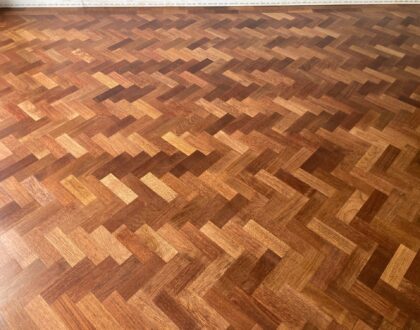
Is Parquet Floor Restoration Worth It?
06/08/2026
Testimonial Five
See more of our customer reviews at Checkatrade.com
YOU’RE IN GOOD HANDS






Contact our local carpet cleaners and local floor sanders near you to discover more about a full selection of floor restoration services.
Contact Us