
Marble Floor Restoration Cleaning

by admin
How Marble Floor Restoration Works
Marble flooring can lose its appearance over time due to wearaining within the stone
Marble flooring can lose its appearance over time due to wear, scratches, staining, and uneven surfaces. When this happens, a full marble restoration process is often required to bring the floor back to a clean, level, and polished condition.
- dull or patchy finish
These issues cannot be resolved with surface cleaning alone and require a structured restoration process.
Step 1: Deep Cleaning and Preparation
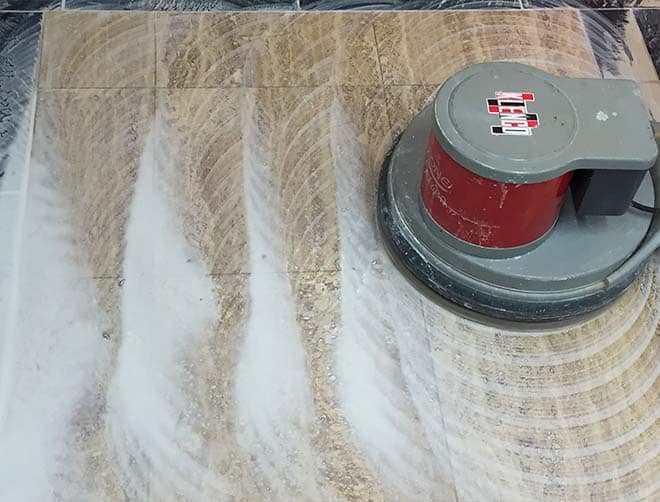
The first stage of marble restoration is a thorough mechanical deep clean. This removes dirt, residues, and contaminants from the surface and prepares the floor for grinding.
This stage is essential to ensure that the restoration process works on a clean and stable surface.
Step 2: Grinding to Remove Lippage and Damage
Grinding is one of the most important steps in marble floor restoration. This process levels the surface by removing lippage and correcting deep scratches.
Without proper grinding, uneven tiles and defects will remain visible even after polishing.
Step 3: Honing the Surface
Once the floor has been levelled, honing is used to refine the surface and remove the scratch patterns created during grinding.
This involves progressively finer abrasives to smooth the stone and prepare it for polishing.
Step 4: Marble Floor Polishing
Polishing restores the final finish of the marble and brings out its natural appearance.
The method used depends on the type and condition of the stone. In some cases, polishing powders are used, while in others a crystallisation process may be more suitable.
Correct product and method selection is essential to achieve a consistent and durable finish.
Step 5: Sealing the Marble Floor
Sealing is a critical final step in the restoration process.
Marble is a porous material, and without protection it will absorb liquids and stains over time. Applying a suitable impregnating sealer helps protect the surface and extend its lifespan.
This creates a barrier that reduces staining and makes ongoing maintenance more effective.
Maintaining a Restored Marble Floor
After restoration, ongoing maintenance is important to keep the floor in good condition and reduce the need for future grinding.
A proper maintenance approach includes:
- using appropriate cleaning products
- regular cleaning to prevent build-up
- periodic professional maintenance where required
This helps preserve the finish and protect the investment in the restoration work.
Professional Floor Restoration Services
At 5 Star Floor Care, we provide specialist floor restoration services for a range of surfaces, including natural stone and wood flooring.
Many of the same principles used in stone restoration also apply to professional floor sanding and wood floor restoration, where correct preparation and finishing are essential to achieving long-lasting results.
If your floor has become worn, uneven, or heavily marked, a full restoration process may be required to return it to its best condition.
Unlike standard cleaning, marble restoration involves multiple stages of controlled grinding, honing, polishing, and sealing to correct damage and restore the natural finish of the stone.
Common Problems with Worn Marble Floors
Heavily used marble floors often develop a range of visible issues, particularly where maintenance has been inconsistent or the floor has been subjected to regular traffic.
Typical problems include:
- lippage where tiles are uneven
- deep scratches across the surface
Recommended Posts
How Does Dust-Controlled Floor Sanding Work?
08/08/2026
Is Parquet Floor Restoration Worth It?
06/08/2026
Testimonial Five
See more of our customer reviews at Checkatrade.com
YOU’RE IN GOOD HANDS






Contact our local carpet cleaners and local floor sanders near you to discover more about a full selection of floor restoration services.
Contact Us