
Can You Change The Colour Of Wooden Floors?

by Darren Admin
If you own a home with wooden floors, the colour of those boards has a significant impact on the overall feel of a room. Over time, you might find the existing shade no longer suits your taste, or it may have faded, yellowed or darkened with age. The good news is that you can often change the colour of wooden floors, but the result depends on the type of timber, the existing finish, the condition of the floor and how much preparation is possible.
Changing the colour of a wooden floor is not the same as repainting a wall. Wood is a natural material. It has grain, density, age, previous coatings, sunlight exposure and sometimes old stains sitting below the surface. That means two floors treated with the same stain can still end up looking different. This article explains what is possible, what is realistic, and when floor refinishing is usually the right approach.
Why Homeowners Want To Change Their Floor Colour
There are several common reasons homeowners decide to change the colour of their wooden floors. Some move into a property where the previous owner chose a shade that does not match their furniture or decoration. Others find that their floor has become sun-bleached in patches, leaving lighter areas around rugs, furniture or windows. Older lacquers and oils can also amber over time, making the floor look more orange or yellow than it originally did.
Interior styles change as well. Dark, rich tones can suit some rooms beautifully, while lighter natural finishes can make the same room feel brighter and more modern. Unlike carpet, a wooden floor can often be worked on again, which gives homeowners the option to refresh the appearance rather than replace the floor completely.
The important point is that colour change should be planned around the floor you actually have, not just the colour you would ideally like. A floor’s species, thickness, previous sanding history and current condition all affect the final result.
Can Wooden Floors Actually Change Colour?
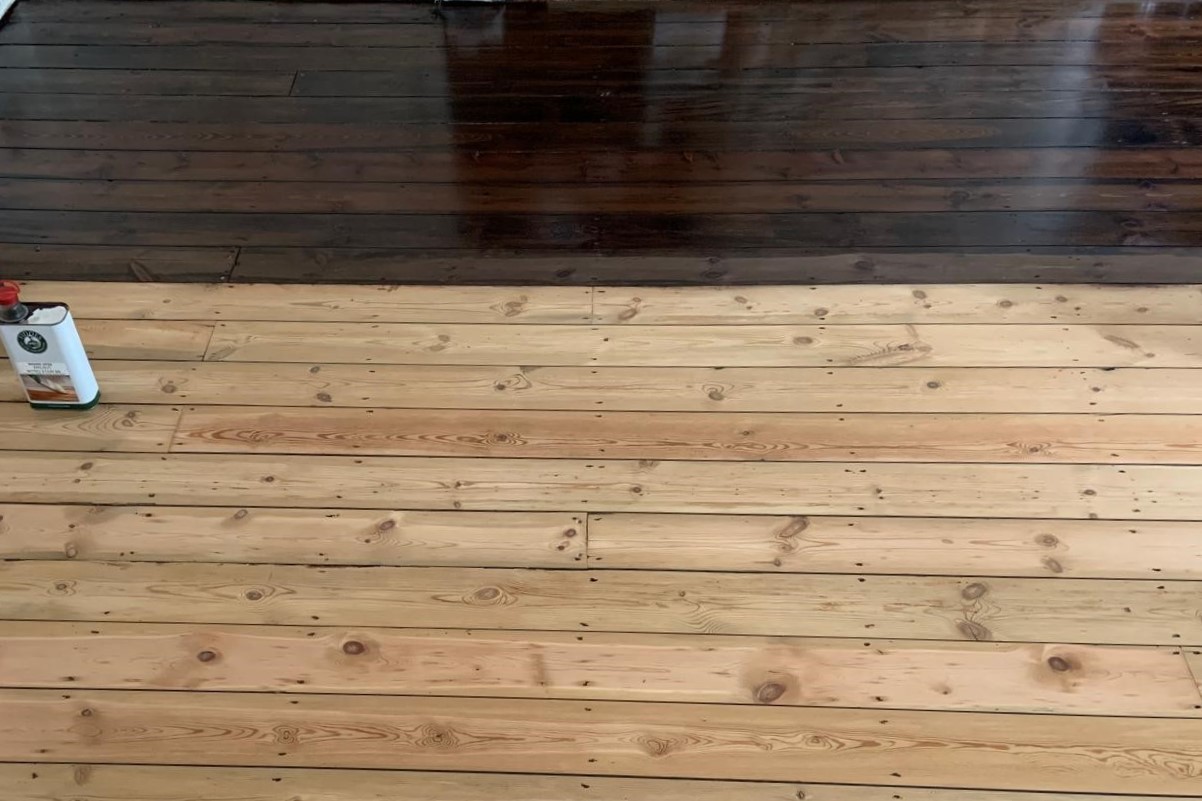
Yes, wooden floors can often be changed using stains, coloured oils, tinted lacquers or paint. The most common method for a significant colour change is to remove the existing finish by sanding, then apply a new stain or coloured oil before sealing the surface.
Stains change the colour while allowing the natural grain of the wood to remain visible. This is usually the preferred route when the aim is to keep the floor looking like real wood. Coloured hardwax oil can also alter the tone, often with a softer and more natural appearance. Paint gives a very different result because it covers the grain and creates a solid colour surface.
It is sometimes possible to adjust the colour slightly without full sanding, usually through compatible recoating systems. However, these methods are normally suitable for refreshing or subtly changing an existing finish rather than transforming a floor from dark to light or from orange to pale grey. For a dramatic colour change, proper preparation and sanding are usually needed.
How The Colour Change Process Usually Works
Changing the colour of a wooden floor is usually a multi-stage process. Each stage affects the finished appearance, so shortcuts can be very visible.
1. Assessing The Floor
Before any colour is chosen, the floor should be assessed. The key questions are simple but important: is it solid wood or engineered wood, has it been sanded before, is there enough timber left, is the floor stable, and what finish is currently on the surface?
This is especially important with engineered flooring. The real wood top layer can vary significantly in thickness. If you are unsure whether your floor can tolerate another sanding cycle, the related article on whether engineered wood floors can be sanded more than once explains why the wear layer matters so much.
2. Removing The Existing Finish
Most wooden floors are protected with lacquer, oil, wax or a previous coating system. These finishes must usually be removed before new colour can be applied. If old coating remains in the grain or around the edges, a new stain may absorb unevenly.
This is where professional floor sanding becomes important. The aim is not just to make the floor look clean. The aim is to create an even, open timber surface that can accept colour consistently.
3. Testing The Colour
Colour samples should ideally be tested on the actual floor rather than chosen from a screen image or printed chart. Timber species, room lighting and previous treatments all affect the final tone. A stain that looks cool grey on one oak floor may look warmer on another.
4. Applying The Colour
Once the floor is prepared, the chosen stain, coloured oil or tinted finish is applied. Application needs to be consistent. Overlapping, uneven spreading or poor wiping can leave lap marks, darker patches or streaks.
5. Sealing The Floor
After the colour has dried or cured, the floor needs a protective finish. This may be lacquer, hardwax oil or another suitable system. The protective coat affects the final appearance as well as the durability and maintenance requirements.
What Determines The Final Colour?
Several factors influence how a wooden floor looks after staining or refinishing. The same product can produce different results from one home to another.
- Timber species: oak, pine, walnut, maple and tropical hardwoods all absorb colour differently.
- Natural base colour: warm timber will still influence the finished shade.
- Grain structure: open grain usually absorbs more stain than tight grain.
- Previous staining: old pigment can remain below the surface.
- Previous sanding: uneven sanding can cause uneven stain absorption.
- Existing damage: scratches, dents and water marks may become more noticeable after staining.
- Finish choice: lacquer, oil and hardwax oil can all alter the final tone.
- Lighting: natural and artificial light can make the same floor look warmer, cooler, lighter or darker.
This is why a realistic sample area matters. It gives a better indication of the likely result than a brochure image or online photograph.
How Timber Species Affect Stain Absorption
Timber species is one of the biggest factors in wooden floor colour change. Some woods accept stain evenly. Others are naturally oily, dense or varied in grain, which can make staining more difficult.
Oak Flooring
Oak is one of the most stain-friendly flooring timbers. Its open grain accepts colour well, and it can often be darkened, softened, warmed or cooled with the right stain or oil. This makes oak a good candidate for many refinishing projects.
However, oak has a naturally warm base tone. If the desired finish is pale grey, whitewashed or very cool in appearance, that natural warmth still has to be considered. The related article on whitewashed wooden floors is useful if you are specifically considering a lighter, washed or pale-toned finish.
Pine Flooring
Pine can be more unpredictable. It is softer than oak and often absorbs stain unevenly. Knots, resin pockets and growth rings can all take colour differently. Without careful preparation, pine can become blotchy, especially with darker stains.
Parquet Flooring
Parquet flooring can often be stained successfully, particularly when it is made from oak or another suitable hardwood. The challenge is that parquet blocks run in different directions, so the grain catches colour differently across the pattern.
This can look attractive when controlled, but it also means parquet floor sanding and restoration needs careful sanding, preparation and testing before a colour change is attempted.
Engineered Wood Flooring
Engineered wood flooring may be suitable for colour change, but only if the real wood wear layer is thick enough. Some engineered floors can be sanded and refinished. Others have a very thin top layer that cannot safely tolerate aggressive sanding.
Dense Or Oily Hardwoods
Some hardwoods contain natural oils that can resist stain absorption. Timbers such as teak or iroko may require specialist products or a different finishing strategy. In some cases, enhancing the natural colour of the timber is a better option than trying to force a dramatic change.
Changing A Wooden Floor From Light To Dark
Darkening a wooden floor is usually more straightforward than making a dark floor lighter. A pale or natural timber can often be stained to a medium brown, dark oak, walnut or ebony tone if the surface is prepared correctly.
That does not mean dark stains are automatically easy. They can highlight sanding marks, scratches, edge marks and uneven preparation. They can also make dust, pet hair and small surface marks more noticeable after the floor is in use.
A darker finish may work well when the timber accepts stain evenly, the room has enough natural light, and the floor condition is good enough that the stain will not draw attention to defects.
Changing A Wooden Floor From Dark To Light
Lightening a dark wooden floor is usually more difficult than darkening a light one. Dark pigment can sit deep in the grain, and sanding may not remove every trace without taking away too much timber.
For example, a floor previously stained dark walnut may still hold pigment below the surface. Even after careful sanding, it may not return to a pale raw-wood appearance. The natural colour of the timber also remains a factor.
Bleaching can sometimes be used to alter timber colour, but it is a stronger chemical process and is not suitable for every floor. It can also affect how stains and finishes behave afterwards. For this reason, bleaching should never be treated as a simple shortcut.
If the goal is to move from very dark to very pale, the floor needs careful inspection and realistic sample testing before any decision is made.
Stain, Coloured Oil, Tinted Lacquer Or Paint?
There is more than one way to change the colour of a wooden floor. The right option depends on the look you want, the condition of the floor and how much grain you want to keep visible.
- Wood stain is useful for stronger colour changes while keeping the grain visible.
- Coloured hardwax oil can create a more natural-looking colour shift with a softer finish.
- Tinted lacquer can adjust tone while adding a protective surface coating.
- Paint creates a solid colour but hides most of the natural grain.
For most homeowners who want the floor to still look like wood, stain or coloured oil is usually more appropriate than paint. Paint can work in certain design-led interiors, but it changes the character of the floor completely.
Why Preparation Has Such A Big Impact
The quality of the final colour change depends heavily on preparation. Stain does not hide poor preparation. In many cases, it makes poor preparation more obvious.
If old finish remains, the new colour may sit on some areas and soak into others. If sanding is uneven, the stain may appear darker in some boards and lighter in others. If dust or residue remains on the surface, it can affect how the finish bonds.
Preparation may need to deal with old lacquer, oil, wax, previous stain, uneven sanding, scratches, dents, loose boards, gaps, filler compatibility and moisture issues. Where the floor has visible damage or movement, floor repairs may need to be considered before staining or refinishing.
Real-World Example: Changing A Dark Oak Floor To Light Grey
Consider a common example. A homeowner has an oak floor finished with a dark brown stain and matt lacquer. They want to change it to a light grey tone to suit a modern interior.
To achieve this, the existing lacquer and stain must be removed by sanding. Because dark pigment often penetrates into the grain, more timber may need to be removed than with a clear finish. Once the floor is back to clean timber, a grey stain can be tested.
Oak naturally has warm yellow-brown undertones, so the final grey may not be a pure cool grey. It may lean slightly warm unless the colour system is adjusted. This is why a test area is so important before the full floor is stained.
The lesson is simple: the final result depends on the starting point. The floor’s existing colour, timber species and previous finish all influence what is possible.
Common Mistakes And Unrealistic Expectations
Many problems with wood floor colour changes come from expecting stain to behave like paint. Stain changes the colour of the timber, but it does not cover every mark, repair or variation.
Expecting Stain To Hide Damage
Stain can make scratches, dents and water marks more noticeable because damaged fibres may absorb colour differently from surrounding timber. If the floor is damaged, repair work or wider wood floor restoration may be needed before the final finish is chosen.
Choosing A Colour From A Screen Image
Online images can be useful for inspiration, but they are not reliable colour guarantees. Lighting, editing, timber species, floor age and finish type all affect how a floor appears in a photograph.
Assuming Every Floor Can Go Pale
Light floors are popular, but not every floor can be taken to a pale colour safely. Previous dark stain, thin engineered wear layers, deep marks or naturally warm timber can all limit the end result.
Using The Same Stain On Different Woods
The same stain can look different on oak, pine, parquet or engineered flooring. The timber is part of the colour, not just the surface underneath it.
Professional Assessment Considerations
Before deciding on a colour change, the floor should be assessed properly. Important questions include:
- Is the floor solid wood, engineered wood or parquet?
- Has it been sanded before?
- Is there enough timber or wear layer left?
- Are there loose boards or blocks?
- Are there damp, rot or staining issues?
- What finish is currently on the floor?
- Will filler, repairs or replacement boards affect the colour?
These details determine whether staining is realistic, whether refinishing is suitable, or whether a different approach would produce a better result.
Alternative Options When Staining Is Unsuitable
There are situations where staining may not be the right choice. If an engineered floor has a very thin wear layer, heavy sanding may be too risky. If the timber is naturally oily or difficult to stain, a coloured oil or tinted lacquer may give a more reliable result. If the existing floor has patchy repairs or mixed boards, a painted finish may be considered where a uniform solid colour is more important than showing the grain.
In some cases, a lighter maintenance approach may be enough. In others, full refinishing is the safer route. The correct decision depends on the condition of the floor and the result the homeowner wants.
When Floor Refinishing Is The Best Solution
When the aim is a significant, even and durable colour change, floor refinishing is usually the best solution. Refinishing removes the old finish, prepares the timber properly, applies the chosen colour and protects the floor with a suitable topcoat.
This process does more than change colour. It can improve the overall appearance of the floor, reduce the effect of surface wear and create a more consistent finish across the room.
Refinishing is often suitable for solid oak floors, many parquet floors and engineered floors with sufficient wear layer. If the floor has deeper damage, movement or previous poor workmanship, restoration and repairs may need to be part of the plan.
Why Expertise Matters
Changing the colour of a wooden floor is more technical than many homeowners expect. It involves timber behaviour, stain absorption, sanding quality, finish compatibility and realistic judgement.
A small error during sanding or staining can affect the whole floor. Lap marks, blotchy colour, poor adhesion or an unsuitable finish can be expensive to correct. Good results depend on understanding how the floor is likely to respond before the colour is applied.
Expertise also matters because sometimes the most helpful advice is not “yes, that colour is possible” but “that exact result is unlikely on this floor, and this alternative would be safer”.
How Long Does Floor Refinishing Take?
For a typical room, sanding, staining and applying protective coats usually takes between two and four days. The exact timescale depends on the room size, floor condition, drying times and the finish system being used.
Colour work can take longer than a clear finish because sample testing and drying time matter. Furniture usually needs to be removed, and the floor should be protected from heavy use while the finish cures.
Will The New Colour Stay The Same?
A refinished wooden floor will continue to age. Sunlight, rugs, furniture placement, cleaning products and daily traffic can all influence how the colour develops over time. Some finishes amber slightly. Some pale finishes become warmer. Areas exposed to sunlight may change faster than shaded parts of the room.
This does not mean colour change is a bad idea. It simply means wood remains a natural material. The best results come from choosing a finish that looks good now and will still suit the room as the floor matures.
Final Thoughts
Changing the colour of wooden floors is often possible, but it should be approached carefully. The best results come from understanding the floor first, then choosing a colour and finish that suit the timber rather than forcing the floor to match an unrealistic image.
Darkening a floor is usually easier than making a dark floor very pale. Oak often offers more flexibility than pine. Parquet can look excellent when stained, but its block pattern and grain direction need careful handling. Engineered wood can often be refinished, but the wear layer must always be checked first.
If your goal is to change the appearance of a wooden floor while keeping the natural grain visible, sanding, staining and refinishing are usually the most relevant options. If the floor has damage, movement or previous poor workmanship, repairs or wider restoration may need to be considered before the final colour is chosen.
A successful colour change is not just about selecting a stain. It is about preparation, testing, timber knowledge and realistic expectations. When those parts are handled properly, an existing wooden floor can often be given a completely different look without losing the character that makes real wood worth keeping.
Frequently Asked Questions
Can all wooden floors be stained?
Many wooden floors can be stained, but not all floors are equally suitable. Oak usually accepts stain well, while pine can become patchy and oily hardwoods may resist colour. Engineered flooring depends on the thickness of the real wood wear layer.
Can dark floors be made lighter?
Sometimes, but it is usually more difficult than making a light floor darker. Dark pigment can remain deep in the grain, and sanding may not remove all of it safely. Bleaching may be possible in some cases, but it is not suitable for every floor.
Does staining hide damage?
No. Staining can make scratches, dents, water marks and poor repairs more visible because damaged timber absorbs colour differently from surrounding wood.
Will the colour look the same on every floor?
No. The final colour depends on timber species, existing finish, grain pattern, sanding quality, lighting and the chosen topcoat. The same stain can look different on different floors.
Can engineered wood floors change colour?
Yes, if the real wood wear layer is thick enough to sand safely. If the wear layer is too thin, heavy sanding may damage the floor and a lighter recoating option may be more suitable.
Is stain better than coloured oil?
Stain is often better for a stronger colour change, while coloured oil can create a softer, more natural-looking result. The right choice depends on the timber, the desired colour and how the room is used.
Can parquet flooring be stained?
Yes, parquet flooring can often be stained successfully, especially when made from oak. The grain direction changes from block to block, so careful sanding and testing are important.
How long does floor refinishing take?
For a typical room, sanding, staining and applying protective coats usually takes two to four days. Larger areas, complex parquet layouts or specialist finishes may take longer.
Recommended Posts
How Does Dust-Controlled Floor Sanding Work?
08/08/2026

Is Parquet Floor Restoration Worth It?
06/08/2026
Testimonial Five
See more of our customer reviews at Checkatrade.com
YOU’RE IN GOOD HANDS






Contact our local carpet cleaners and local floor sanders near you to discover more about a full selection of floor restoration services.
Contact Us