
Can Old Wooden Floors Be Saved Without Replacement?

by Darren Admin
 There comes a point in many older homes when the living room floor starts to look beyond saving. The finish has worn away along the main walkway, a dark stain sits near the old fireplace, the boards creak underfoot and a contractor has already suggested replacement.
The instinct to keep the original floor is understandable. Original floorboards carry the character and history of a home, and few modern alternatives reproduce that feel convincingly. But a fair question remains: is restoration actually possible, or is replacement the only realistic route?
The honest answer is that many old wooden floors can be saved without replacement, even when they look far beyond repair. But not every floor can be saved, and the deciding factors are not always visible from the surface. This guide explains how to think about the decision calmly, what often can be repaired, and when replacement is genuinely the better choice.
Why An Original Wooden Floor Deserves A Second Look
In many cases, restoring an original floor is worth considering before replacement. If the floor is original to the property, structurally sound and has not been sanded too many times before, restoration may preserve something that would be difficult to replace later.
There is also the question of the timber itself. Older floors are often made from dense, slow-grown wood that is no longer commonly available in the same quality. Replacing an old floor with new boards may solve one problem, but it also removes original material that may still be perfectly serviceable.
This does not mean saving the floor is always the right answer. It means the floor should be assessed before it is written off. A worn finish, dark marks, gaps, old repairs or missing sections can all look severe, but they do not automatically mean the whole floor needs to be removed.
Why Some Floors Look Worse Than They Are
It is easy to judge a floor by its surface. A floor covered in old polish, ingrained dirt, scratches or patchy finish can look finished when the timber beneath is still sound. Most of what makes an old floor look tired is often sitting on the surface rather than running through the full depth of the board.
Floors that have spent decades hidden under carpet can be particularly deceptive. When the covering is lifted, the boards may look dry, dusty, stained or dull, but that does not mean they are beyond use. Once adhesive residue, old finish and surface grime are removed, the timber below may be in far better condition than expected.
The important point is that appearance alone is not a reliable guide. A floor can look poor and still be restorable. A floor can also look acceptable from a doorway while hiding movement, moisture or thin timber. The decision should come from the condition of the floor, not the first impression.
What Decides Whether A Floor Can Be Saved?
No two old floors are the same. Two properties on the same street can have floors in completely different condition depending on moisture exposure, previous sanding, old repairs, how the room has been used and what has happened during building work.
The main question is not simply whether the floor is old. It is whether enough sound timber remains and whether the floor can be made stable before sanding and finishing. A proper wood floor restoration assessment looks at the floor as a whole rather than judging only the surface.
- Is the timber firm rather than soft, rotten or brittle?
- Do the boards or parquet blocks feel secure underfoot?
- Is damage localised or spread across the whole room?
- Has the floor been sanded heavily before?
- Are any water problems historic, or is moisture still present?
- Can missing sections be repaired with suitable timber?
- Will restoration leave enough original material to make saving the floor worthwhile?
Signs Your Floor May Be A Good Restoration Candidate
Before assuming replacement is necessary, look for positive signs that the floor still has good restoration potential.
- Will restoration leave enough original material to make saving the floor worthwhile?
- The boards feel firm underfoot rather than soft or spongy.
- Damage is confined to certain areas rather than affecting the whole floor.
- Water damage appears historic and the floor is now dry.
- Missing sections are limited and could potentially be repaired.
- Loose boards or parquet blocks are localised rather than widespread.
- The floor has not been heavily sanded multiple times before.
- Most of the original timber remains intact.
The floor’s problems are mainly cosmetic, such as worn finish, scratches, old stains or surface marks. These signs do not guarantee that restoration will be possible, but they often indicate a floor is worth investigating before replacement is considered. Many homeowners are surprised to discover that a floor which looks tired, damaged or neglected still has plenty of usable timber beneath the surface.
Timber Condition
The condition of the timber is the foundation of the decision. If the boards are solid, free from widespread rot and not worn dangerously thin, restoration is often feasible. Surface scratches, finish wear and minor dents are very different from timber that has softened or broken down.
A board can look tired but still be structurally sound. It can also look acceptable on top while being weak at the edges, around old fixings or near areas exposed to moisture. This is why the floor has to be inspected rather than judged only from photographs.
Where timber is sound, restoration can often return the floor to service. Where timber is soft, brittle or decayed, affected sections may need to be replaced instead of sanded.
Structural Stability
A floor that moves when walked across needs attention before any cosmetic work takes place. Loose boards, creaking, lifting sections or areas that dip underfoot often indicate that the floor needs repair and stabilisation before sanding.
Many stability problems can be corrected. Boards can often be secured, local sections can be strengthened and movement can sometimes be reduced enough for the floor to be restored successfully. This type of work sits naturally within floor repairs, especially when the aim is to prepare the floor properly before the final sanding and finishing stages.
However, if a floor is so unstable that large areas would need rebuilding, replacement may be the more honest recommendation. The aim is not to save a floor at any cost; it is to save whether enough of the original floor can be saved sensibly.
Water Damage
Water damage is one of the issues that can genuinely threaten an old wooden floor. Light staining or minor distortion may be repairable, especially where the source of water has been resolved and the timber is now dry. Deeper damage needs more caution.
Black marks, cupping, raised boards, softness or repeated moisture exposure can indicate that water has affected more than the surface. Some water-damaged wooden floors can be restored with drying, repair, sanding and board replacement where needed. Others are too damaged in the affected areas to save without removing sections.
No responsible answer should promise that every water mark will disappear. Light marks may sand out. Deeper black staining may remain visible or require board replacement. If timber has rotted, sanding will not bring it back.
Missing Sections And Old Hearth Removals
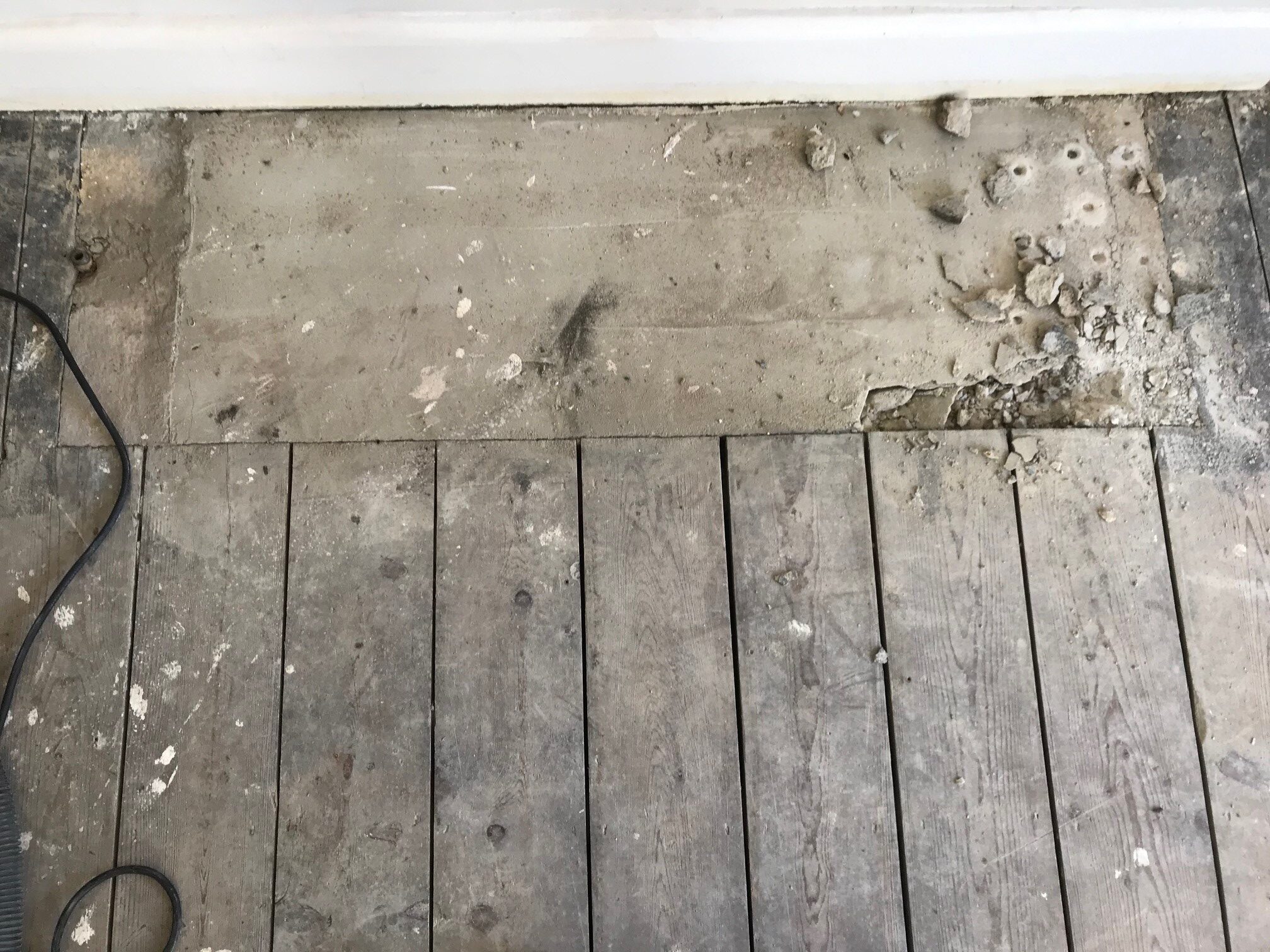
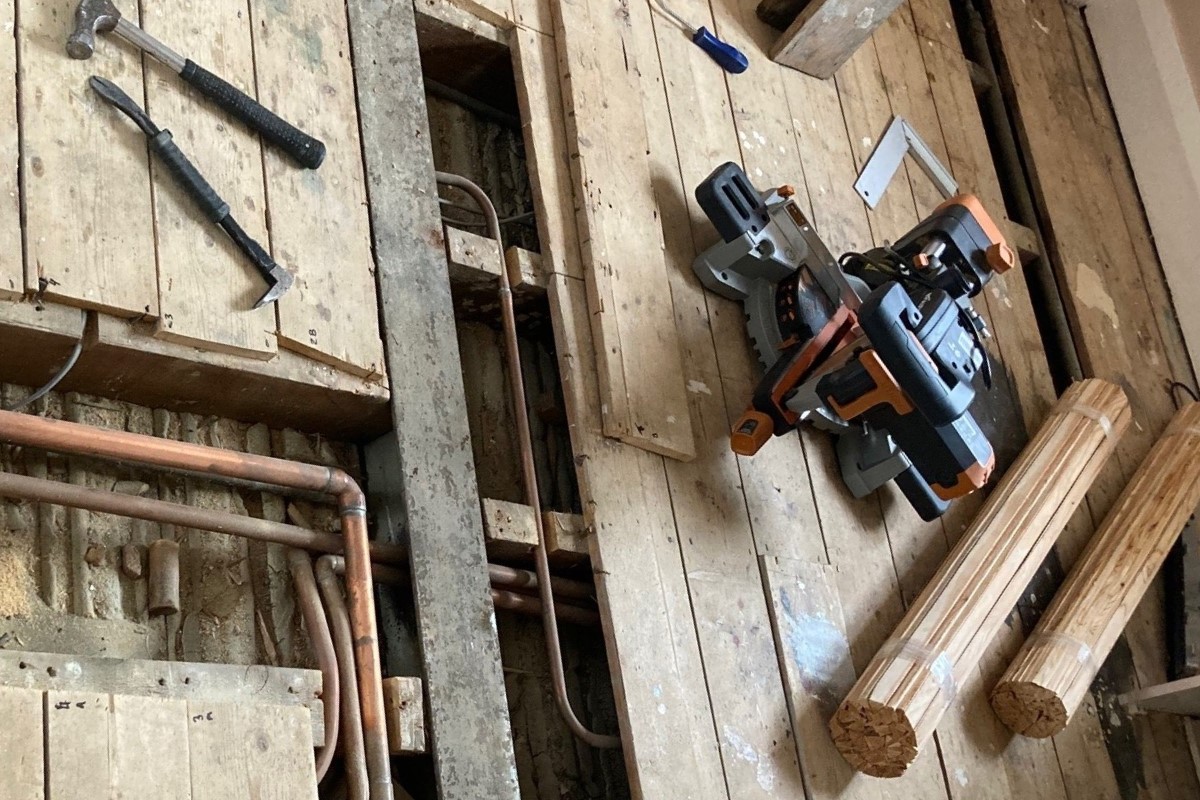
Period homes often have missing sections of flooring. Fireplace or hearth removals, old pipe routes, wall alterations and previous building work can all leave gaps that look too severe for restoration at first glance.
In many cases, missing sections of wooden flooring can be repaired with suitable replacement boards or blocks. The new timber is fitted, levelled, sanded and finished with the rest of the floor so the area becomes part of the overall surface again.
The important expectation is that new timber may not match old timber perfectly on day one. Older boards have changed colour through age, use and light exposure. A skilled repair can reduce the contrast and help the section blend, but the aim is a sympathetic repair rather than claiming it will vanish completely.
Previous Repairs
Old repairs can make a floor look worse than it really is. Gaps may have been filled with the wrong material, boards may have been patched with mismatched timber, and rough repairs may sit higher or lower than the surrounding floor.
Some poor repairs can be removed and replaced with better timber or a more appropriate filling method. Others reveal wider issues once opened up. This is one of the reasons an initial assessment sometimes has to be cautious: it may not be possible to see the full condition until some old repair work is exposed.
A good restoration plan separates failed repair work from the actual condition of the floor. The repair may be the problem, not the original floor itself.
Parquet And Herringbone Floors
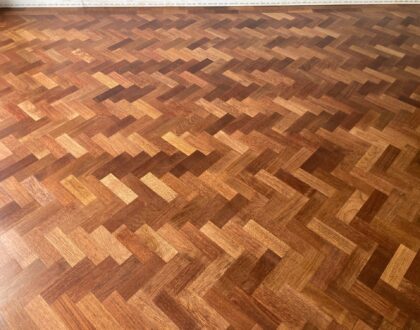
Parquet and herringbone floors need their own judgement because they are built from individual blocks. Loose blocks, failed adhesive, missing pieces and uneven sections are common in older parquet floors and can make the floor look worse than it really is.
Where the blocks are mostly sound, parquet floor restoration can often involve re-fixing loose blocks, replacing missing pieces where suitable material is available, sanding carefully and applying an appropriate finish. Pattern preservation matters, so repairs should normally happen before sanding.
In some cases, parquet or engineered floors in reasonable condition may benefit from cleaning, buffing or refinishing rather than full sanding. The key point is that moving blocks must be stabilised before any finish is applied.
Previous Sanding History
Every sanding removes a small amount of timber. That is normal and usually safe when a floor has enough usable material remaining. The problem comes when a floor has already been sanded heavily several times before.
A floor may be too thin for further sanding if fixings, tongues, joints or board edges are becoming exposed. Engineered floors also depend on the thickness of the wear layer. These limitations do not always show clearly until the floor is assessed closely.
Previous sanding history can be the difference between restoration, lighter refinishing or replacement. A floor that looks restorable may not be safe to sand again if too much timber has already been removed.
What Restoration Usually Involves
When restoration is the right route, the work normally follows a clear order. The floor is assessed first, then loose or damaged areas are repaired, missing sections are rebuilt where appropriate, movement is stabilised and the surface is prepared for sanding.
Floor sanding is often the stage that transforms the appearance of the room, but it should not be treated as the whole solution. Sanding removes old coatings, surface marks and roughness. It does not secure loose boards, repair rot, rebuild missing timber or fix failed parquet adhesive.
Once the floor has been repaired and sanded, the final finish protects the timber. If a floor is structurally sound and only the surface finish has failed, floor refinishing may be enough. If the floor has deeper issues, restoration is the more complete process.
When Restoration Is Usually More Sensible Than Replacement
Restoration is often worth considering where the floor still has good timber, the damage is localised, and the original material contributes to the character of the property. This is especially common with period floorboards, pine boards, hardwood floors and parquet floors where the structure can be stabilised.
Saving the floor may also reduce waste and avoid the disruption of removing and replacing the entire surface. It can keep original materials in place while still improving appearance, usability and protection.
That said, restoration should not be sold as the answer to every problem. It is the right choice when the floor can be made sound and the finished result will be durable.
When Replacement Is The More Realistic Option
Some floors are genuinely beyond sensible restoration. Replacement may be the better route when the timber is severely rotten, brittle, deeply charred, structurally compromised, too thin from previous sanding, heavily moisture damaged or too unstable to repair economically.
Replacement may also make sense when so much of the original timber would need removing that very little of the floor would actually remain. In that situation, calling the work restoration can be misleading.
Honest advice sometimes means recommending replacement rather than sanding a floor that will not perform properly. The decision should be based on safety, durability and value, not just the desire to keep old timber at any cost.
Partial Replacement: The Middle Ground
The choice is not always full restoration or full replacement. Many old floors contain a mixture of good timber and damaged timber. In those cases, partial replacement can be the sensible middle ground.
Individual boards that are rotten, missing or badly damaged can often be cut out and replaced while the surrounding original floor is kept. The same applies to parquet floors, where individual blocks or local sections may be replaced instead of lifting the entire floor.
This approach preserves as much original material as possible while dealing honestly with the sections that cannot be saved. It is often the most practical answer for old floors with localised damage.
A Practical Decision Table
Use this table as a starting point. It cannot replace an inspection, but it helps separate cosmetic problems from issues that may affect whether the floor can be saved.
| What You See | Can It Usually Be Saved? | Notes |
|---|---|---|
| Worn finish | Often yes | Usually a surface issue if the timber is sound |
| Surface scratches | Often yes | Usually improved through sanding and finishing |
| Large gaps | Often, but assess first | Gap size, movement and floor type matter |
| Loose boards | Often yes | Boards usually need securing before sanding |
| Missing sections | Often yes | Replacement timber can often be fitted and blended |
| Water staining | Sometimes | Depends on depth, moisture history and timber condition |
| Black marks | Sometimes | May reduce during sanding or need board replacement |
| Loose parquet blocks | Often yes | Blocks should be re-secured before sanding |
| Rotted timber | Not always | Affected areas usually need removal |
| Severe structural movement | Sometimes not | May require rebuilding or replacement |
| Heavily over-sanded boards | Sometimes not | Remaining timber thickness is critical |
| Widespread brittle timber | Often no | Replacement may be safer and more durable |
Common Misconceptions About Saving Old Floors
Old wooden floors are often written off too quickly, but they can also be over-promised. A realistic view sits between those extremes.
- If it looks bad, it must be replaced.
- Water damage always means the whole floor is finished.
- Sanding fixes every problem.
- New timber can always be matched invisibly with old timber.
- Parquet floors cannot be repaired once blocks come loose.
- Replacement always gives a better result than restoration.
- Every original floor is worth saving regardless of condition.
The better question is not whether the floor is old or damaged. The better question is whether the floor can be made stable, safe and presentable without replacing more timber than it keeps.
Examples Of Floors That May Still Be Saved
A Victorian pine floorboard floor that has been hidden under carpet for decades may look grey, dusty and marked at first. If the boards are firm and thick enough, sanding, repairs and finishing can often bring it back into use.
A dining room floor with a removed hearth may look incomplete, but if the surrounding boards are sound, the missing area can often be patched with suitable timber and blended into the wider floor during restoration.
A parquet floor with several loose or missing blocks may look serious, but local block replacement and re-fixing may preserve most of the original pattern. The result depends on block condition, adhesive failure and available matching material.
A hallway with water staining needs more caution. If the damage is mainly surface-level and historic, restoration may be possible. If timber is soft, rotten or still affected by moisture, local replacement or wider replacement may be needed.
How A Professional Assessment Helps
The most useful step for a homeowner is a proper assessment before deciding on replacement. The visible surface tells only part of the story. Movement, damp, rot, previous sanding and subfloor condition all affect what is realistic.
A specialist assessment should look at timber condition, moisture signs, remaining board thickness, previous repairs, loose areas, missing sections and whether the floor can be safely sanded. It should also explain what may not be possible, such as perfect colour matching or complete stain removal.
It is worth asking why replacement has been recommended. Sometimes replacement is genuinely correct. Sometimes it is suggested because restoration has not been properly explored. A good assessment should make the options clear rather than push the most extreme solution.
Final Thoughts
Many old wooden floors can be saved without replacement, but appearance alone is not enough to decide. Worn finish, dark marks, gaps, missing sections and loose parquet can all look severe while still being repairable.
The deciding factors are the condition of the timber, the stability of the floor, moisture history, previous sanding, repair requirements and whether enough original material can sensibly remain. Some floors need sanding and refinishing. Some need repair-led restoration. Some need partial replacement. A few genuinely need full replacement.
If an old floor matters to the character of the home, it is usually worth having it assessed before removing it. Proper wood floor restoration is about saving what can be saved, replacing only what cannot, and being honest about the limits of the existing timber.
Frequently Asked Questions
Can very old floorboards be restored?
Yes, many very old floorboards can be restored if the timber is sound, stable and thick enough to sand safely. Age alone is not the problem; condition, previous sanding and moisture history matter more.
Can water-damaged wooden floors be saved?
Sometimes. Light or historic water staining may improve during restoration, but soft timber, rot, severe cupping or ongoing moisture may require board replacement or, in serious cases, full replacement.
Can missing boards be replaced?
Yes. Missing boards can often be replaced with suitable timber and blended during sanding and finishing. An exact match is not always possible, especially on older floors with natural colour variation.
Can rotten timber be repaired?
Rotten timber itself cannot be restored by sanding. Affected sections usually need to be removed and replaced before the rest of the floor can be restored safely.
How much damage is too much?
Damage may be too much where rot is widespread, the floor is structurally unstable, boards are too thin from previous sanding, or replacement would remove most of the original material anyway.
Is restoration better than replacement?
Restoration is often better when the original timber is sound and repairable. Replacement is better when the floor cannot be made stable, safe or durable through repair and restoration.
Can an old floor be restored without sanding?
In some cases, yes. If the floor is structurally sound and the finish only needs maintenance, cleaning, buffing or refinishing may be enough. Floors with deep wear, old coatings or unevenness usually need sanding as part of the work.
Recommended Posts
How Does Dust-Controlled Floor Sanding Work?
08/08/2026
Is Parquet Floor Restoration Worth It?
06/08/2026
Testimonial Five
See more of our customer reviews at Checkatrade.com
YOU’RE IN GOOD HANDS






Contact our local carpet cleaners and local floor sanders near you to discover more about a full selection of floor restoration services.
Contact Us