
Wood Floor Gap Filling: When to Use Resin, Slivers or Flexible Fillers

by Darren Admin
Gaps in wood floors are a common frustration for homeowners. They collect dust, can let in draughts, and may make a room feel unfinished. But filling those gaps is not as simple as squeezing in any product from a hardware shop. The right method depends on the size of the gap, the type of wood, whether the floor is still moving, and the result you want to achieve.
This guide explains the three main approaches used in wood floor gap filling: resin and dust filling, timber slivers, and flexible fillers. Each has strengths, weaknesses and situations where it should be avoided. Understanding those differences can save you from paying for work that looks good briefly but fails once the floor starts moving again.
What Causes Gaps in Wood Floors?
Most gaps are caused by the natural movement of timber. Wood absorbs moisture from the air when humidity is high and releases moisture when the air is dry. As this happens, boards swell and shrink. In a newly laid floor, small seasonal gaps may appear during dry months and close again when humidity rises.
Older floors are different. A Victorian pine floor, for example, may have gone through more than a hundred heating seasons. Over that time, repeated shrinkage can leave permanent gaps that no longer close properly. Central heating, wood burners and underfloor heating can all make this more noticeable because they reduce moisture levels in the air.
The pattern of the gaps matters. Even gaps that appear widely across the floor in winter and reduce in summer usually suggest seasonal movement. Wide, irregular gaps that stay open all year often point to long-term shrinkage, poor installation, weakened fixings, or boards that have moved over time. This difference is important because a filler that works in a stable gap may fail quickly in a moving one.
Do All Gaps Need Filling?
No. Some gaps are part of the floor’s character and are better left alone. A traditional boarded floor with narrow, even gaps can look natural in an older property. Filling every line can sometimes make the floor look too smooth and artificial, especially where the boards were never intended to look like a modern engineered floor.
There are practical reasons to fill gaps. Draughts through ground floor boards can make a room feel colder. Gaps that collect grit and debris are harder to clean. Larger gaps may allow small items to fall through, and uneven open joints can become irritating underfoot. The decision should be based on what the gaps are doing, not simply whether they are visible.
When Leaving Gaps Alone Is Often the Better Choice
Leaving gaps alone can be the right decision when the floor is still moving seasonally, the gaps are narrow and consistent, or the floor has historical character that would be reduced by heavy filling. This is especially true with older pine floorboards where movement is part of the way the floor behaves.
Filling can also be unwise where there are signs of damp, poor ventilation below the boards, loose fixings, or major seasonal changes. In those cases, the filler becomes a cosmetic cover for a movement problem. It may crack, loosen, or trap debris at the edges. A good floor repair decision sometimes means doing less, not more.
When Resin Gap Filling Is a Good Choice
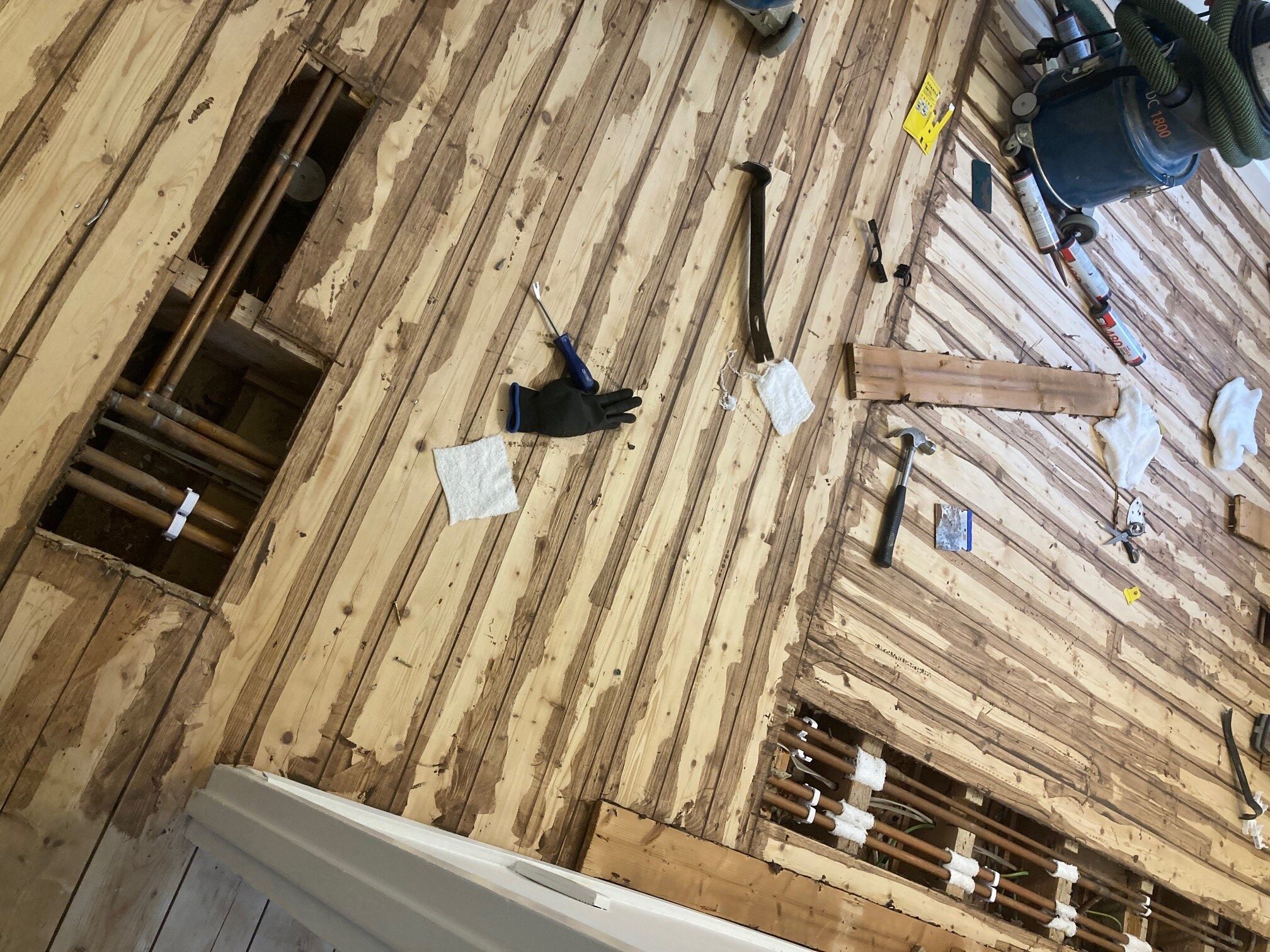
Resin gap filling, often called dust and resin filling, is one of the most common methods used during professional floor sanding. Fine sanding dust from the floor is mixed with a clear resin to create a paste. The paste is worked into the gaps, allowed to dry, and then sanded flush before the floor is finished.
This method works best on small, stable gaps, usually under 5mm. Because the mix uses dust from the actual floor, the colour match is often better than a ready-made filler. On a stable oak floor with 2-3mm gaps, resin can create a clean, smooth finish that blends well after sealing or oiling.
Resin filling is also practical when the floor is already being sanded and finished. The preparation, dust collection, filling and final sanding all happen as part of the same process. For narrow gaps in a stable floor, it is often the most efficient and visually discreet option.
When Resin Filling Is the Wrong Choice
Resin is rigid once cured. That is its biggest limitation. If the boards expand and contract after the filler has hardened, the filler may crack, pop out, or separate from the edges of the gap. This is common in rooms with strong seasonal changes, low winter humidity, wood burners, underfloor heating, or poorly ventilated voids below the floor.
Gaps wider than about 5mm are usually poor candidates for resin. The wider the gap, the more filler is needed and the more stress the cured filler has to absorb. Wide resin fills often become brittle, especially if the boards continue to move. On old softwood boards, the filler may be harder than the timber around it, which can make failures more visible.
Resin can also fall through deep gaps, particularly where there is an open void beneath the boards. Good preparation matters, but preparation cannot make an unsuitable floor suitable. If the floor is unstable, resin is not a long-term answer.
When Timber Slivers Are the Better Option
Timber slivers, sometimes called filler strips, are thin pieces of wood fitted into gaps between boards. They are usually glued into place and sanded level with the floor. For wider, more permanent gaps, slivers can provide a stronger and more natural-looking repair than resin.
Slivers are often considered where gaps are over 5mm and the floor is stable enough to accept them. A well-matched sliver can take stain, oil or lacquer in a similar way to the surrounding boards. On some period floors, this gives a more convincing result than a wide band of filler.
A common example is an older pine floor with long-standing gaps that no longer close in summer. If the boards are secure and the gaps are reasonably straight, slivers may be a better option than resin. They are slower and more labour-intensive, but for the right floor they can be much more durable.
Where Sliver Filling Can Create Problems
Sliver filling is not always the premium answer. If the boards are still moving significantly, the slivers may loosen or the adjacent boards may compress against them. If the floor expands after slivers have been fitted too tightly, the floor can cup, lift, or feel under pressure.
The floor structure also matters. Loose boards, weak fixings, uneven joists or gaps that twist and change width make sliver work harder to do well. Slivers are best suited to reasonably straight, consistent gaps. Irregular gaps may need a mixed approach or may be better left alone.
Sliver filling is also difficult to reverse. Once the strips are glued and sanded, removing them can damage the surrounding boards. That is why slivers should be chosen after assessing the floor’s behaviour, not simply because the gaps look large.
When Flexible Fillers Make Sense
Flexible fillers are usually acrylic or mastic-style products that remain slightly elastic after curing. They are useful for some narrow gaps where movement is expected, especially around the edges of rooms, near skirting boards, or in isolated gaps on an already finished floor.
The main benefit is movement tolerance. A flexible filler can stretch and compress more than resin, so it is less likely to crack immediately when boards move. For narrow 2-4mm gaps in a floor that has mild seasonal movement, it can be a practical compromise.
The trade-off is appearance and durability. Flexible fillers are usually standard colours, so they rarely match the timber as closely as resin mixed with the floor’s own dust or a timber sliver. They can also collect dust along the edges, flatten slightly, or stand out under certain finishes. They are useful, but they are not invisible restoration work.
What About Parquet Floors?
Parquet floors need a slightly different judgement because the gaps are usually between individual blocks rather than long floorboards. Small shrinkage gaps between parquet blocks may be dealt with during broader restoration, but loose or moving blocks should be repaired before any filling is considered.
On parquet, filling is rarely just a cosmetic decision. If blocks are loose, the priority is stability. Filling gaps before addressing movement can trap the problem in place and make later repairs harder. In some cases, targeted block repairs and careful parquet restoration will give a better result than trying to fill every visible line.
Comparing Resin, Slivers and Flexible Fillers
| Method | Best suited to | Strengths | Main limitations |
|---|---|---|---|
| Dust and resin filling | Small, stable gaps under about 5mm | Good colour match, smooth finish, efficient during sanding | Rigid, can crack or pop out if the floor moves |
| Timber slivers | Wider, permanent gaps on stable boards | Durable, natural timber appearance, sands with the floor | Labour-intensive, needs stable boards, can create pressure if movement continues |
| Flexible filler | Narrow moving gaps, edges, isolated repairs | Accommodates some movement, quick to apply, no sanding required | Harder to colour match, less durable in wider gaps, can collect dust |
No method is best in every situation. Resin is often the neatest option for small stable gaps. Slivers are usually better for wider permanent gaps where the boards are sound. Flexible fillers are useful where movement is expected but the homeowner accepts that the finish may be less seamless.
If I Were Choosing for My Own Floor
For a stable oak floor with fine 2-3mm gaps, I would usually consider resin and dust filling as part of the sanding and finishing process. It gives a close colour match and avoids overcomplicating a problem that is mainly cosmetic.
For an old pine floor with 8mm gaps that have been open for years, I would not expect resin to last. If the boards were secure and the gaps were reasonably straight, timber slivers would be worth considering. If the floor still moved heavily every winter, I might leave some gaps alone rather than force a repair that is likely to fail.
For a floor with narrow gaps that open and close each season, flexible filler may be the least risky option, especially at the room edges. I would still explain that it may not blend perfectly and may need maintenance later.
For parquet, I would first check whether any blocks are loose. If they are, the repair starts with securing the blocks, not filling the gaps. A filler chosen before the floor is stable is rarely the right first step.
How Professionals Decide Which Method to Use
A professional assessment starts with the floor, not the filler. The key questions are: how wide are the gaps, how deep are they, are they still moving, what type of timber is it, and how is the room heated? The answer to those questions usually rules certain methods in or out.
The condition of the boards matters as much as the size of the gaps. Soft, damaged or loose boards may need repair before any filling is attempted. If the floor is being fully sanded and finished, resin or slivers can be incorporated into the work. If the floor is already finished and only has a few narrow gaps, flexible filler may be more sensible.
The best choice is the one that gives a realistic result for the way the floor behaves. A method that looks perfect for a few weeks is not a good repair if it fails during the first heating season.
Common Misconceptions About Gap Filling
- Every visible gap should be filled. Some gaps are harmless, attractive, or safer left alone.
- Resin works in any gap. It is best for small, stable gaps and performs poorly when gaps are wide or moving.
- Slivers are always better. They can be excellent, but only when the floor is stable and suitable.
- Flexible filler solves movement. It accommodates some movement, but it does not stop the wood moving.
- Gap filling is permanent. All filled gaps can need maintenance if the floor continues to expand and contract.
Common Homeowner Mistakes
One common mistake is choosing the cheapest or quickest method without considering movement. Resin may look economical at first, but if the floor is still moving it can fail quickly, and removing failed filler is more frustrating than choosing the right method at the start.
Another mistake is overestimating what resin can handle. Gaps larger than about 5mm are often poor candidates for resin, especially on old softwood boards. Homeowners also underestimate the skill involved in fitting slivers. Poorly cut slivers can look worse than the original gaps.
Preparation is another frequent problem. Filling dirty, unstable or uneven gaps leads to poor adhesion and an untidy finish. If the floor needs sanding, gap filling is usually best considered as part of the wider sanding and finishing process, not as a quick separate fix.
The biggest expectation issue is believing filler will stop movement. It will not. Wood still expands and contracts. The right filler either hides the gap well on a stable floor or tolerates some movement where the floor still changes.
Which Gap Filling Method Lasts Longest?
Longevity depends less on the product and more on whether the method suits the floor. Resin can last well on a stable, seasoned floor with small gaps. On a moving floor, it may fail within a couple of heating seasons. Slivers can last for many years on stable boards, but they can loosen or cause pressure if the boards continue to move significantly.
Flexible fillers can be useful where some movement is expected, but they are rarely the most discreet or hard-wearing option in high-traffic areas. They may need touching up sooner than timber-based repairs. The most durable result comes from matching the repair to the floor’s movement, not from choosing the strongest-sounding product.
Practical Checklist Before Choosing a Gap Filling Method
- Measure the average gap width rather than judging by eye.
- Check whether the gaps change size between winter and summer.
- Look for loose, damaged, soft, cupped or uneven boards before filling.
- Consider whether the gaps are cosmetic, draught-related, or part of a wider repair problem.
- Think about the finish you want: seamless, traditional, practical, or simply less draughty.
- Accept that filled gaps may need attention again if the floor continues to move.
- If the floor is due to be sanded, plan the filling as part of the full floor sanding and finishing process.
Frequently Asked Questions
Can I fill gaps in a floor with underfloor heating?
Yes, but it needs careful judgement. Underfloor heating can increase seasonal movement, which makes rigid fillers more likely to fail. Flexible fillers or slivers may be considered depending on the floor type and gap size, but the heating system and timber stability should be assessed first.
How long does resin gap filler last?
On a stable floor with small gaps, resin can last many years. On a floor that continues to expand and contract, it may crack or loosen much sooner. There is no useful guaranteed lifespan without knowing how the floor behaves.
Is it cheaper to fill gaps myself?
It can look cheaper, but the risk is choosing the wrong method or applying it to an unsuitable floor. Failed filler can be difficult to remove cleanly. For small isolated gaps, a homeowner may choose a practical filler, but full-floor gap filling is usually better assessed as part of professional floor repairs or restoration work.
Will filling gaps stop draughts completely?
It can reduce draughts, especially in ground floor rooms with open voids below the boards. It will not stop every draught because air can also pass around skirting boards, through subfloor gaps, or through other parts of the room. Gap filling is one part of improving comfort, not a complete draught-proofing system.
A Better Way to Decide
The most successful gap-filling projects start by understanding why the gaps exist. A stable floor with small cosmetic gaps needs a different approach from a floor that opens up every winter. Rather than choosing a filler first, start by assessing the floor’s movement, the size of the gaps, the condition of the boards, and the result you realistically want.
If the issue is not a gap between boards but an actual missing area of timber, read our guide to missing sections of wooden flooring before choosing a filling method.
Once those factors are understood, the right solution is often clearer. Resin suits small stable gaps. Slivers suit wider permanent gaps on sound boards. Flexible fillers can help with narrow moving gaps where a perfect colour match is less important. Sometimes the best choice is to repair loose boards first, restore damaged areas, or leave some gaps alone.
Recommended Posts
How Does Dust-Controlled Floor Sanding Work?
08/08/2026
Is Parquet Floor Restoration Worth It?
06/08/2026
Testimonial Five
See more of our customer reviews at Checkatrade.com
YOU’RE IN GOOD HANDS






Contact our local carpet cleaners and local floor sanders near you to discover more about a full selection of floor restoration services.
Contact Us