
Can Engineered Wood Floors Be Sanded More Than Once? What Homeowners Need To Know

by Darren Admin
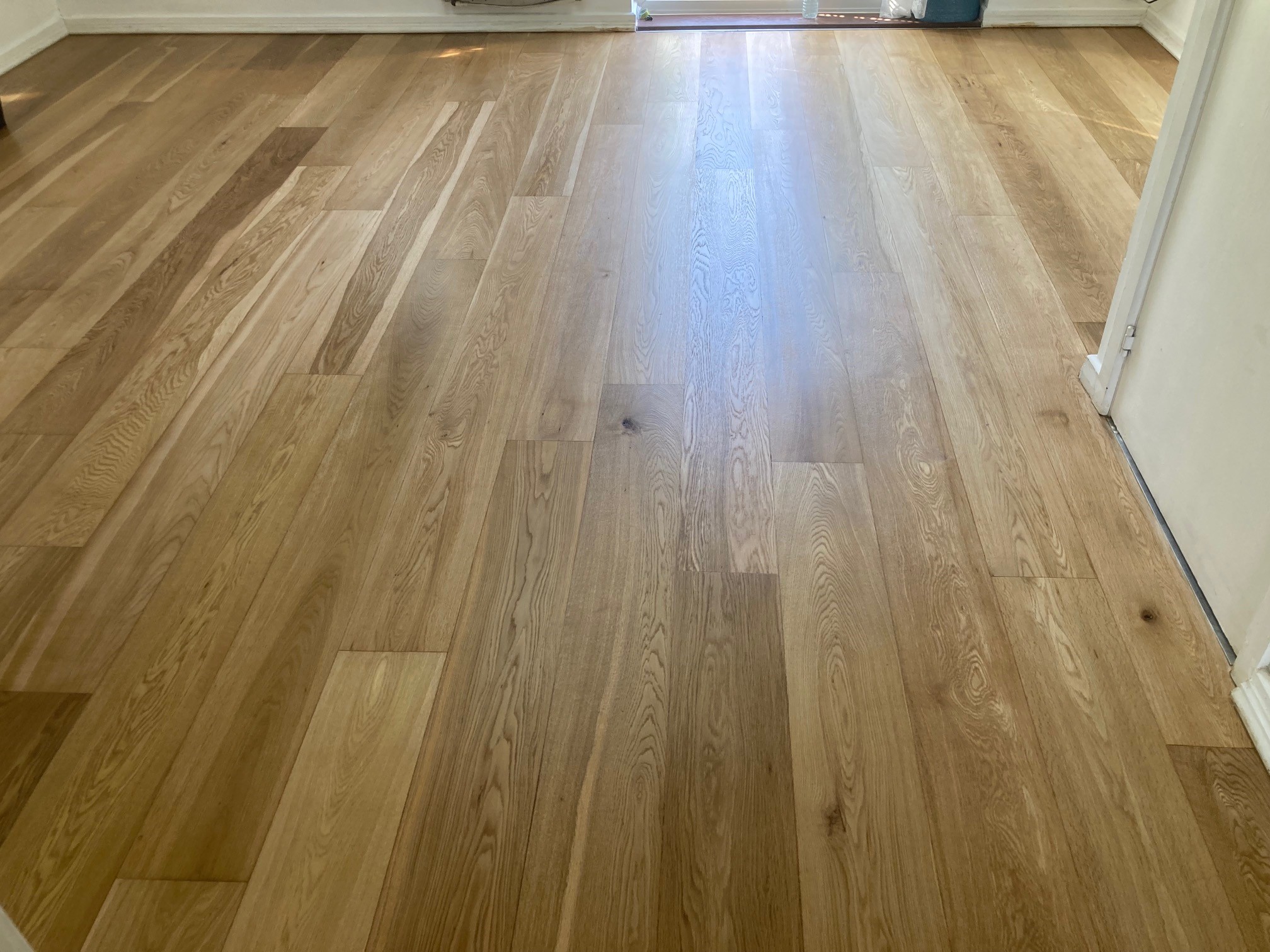
Engineered wood flooring is a popular choice in UK homes because it provides the appearance of real wood while offering good stability in normal domestic conditions. Over time, everyday wear, scratches, dull patches, failed finishes or previous poor workmanship can leave these floors looking tired. At that point, many homeowners ask the same question: can engineered wood floors be sanded again?
The answer is not a simple yes or no.
Unlike solid wood flooring, engineered boards have a finite layer of real wood on top of a plywood or HDF core. This top layer is known as the wear layer. Whether the floor can be sanded again depends on how thick that layer is, how much material has already been removed, what condition the board is in, and whether previous sanding or finishing work was carried out correctly.
In the right circumstances, wood floor restoration can bring an engineered wood floor back to a clean, even and attractive finish. In the wrong circumstances, aggressive sanding can permanently damage the floor by removing too much of the wear layer. Understanding the difference is what helps homeowners make a safe and informed decision.
Why Homeowners Worry About Sanding Engineered Wood Floors More Than Once
Many homeowners assume that engineered wood behaves like solid wood and can be sanded repeatedly over many years. Others assume the opposite and believe engineered floors cannot be sanded at all.
Both assumptions can be wrong.
The concern usually comes from the fact that engineered flooring only has a limited amount of real wood above the core. If too much material is removed, sanding can expose the plywood or HDF underneath. Once that happens, the damaged area cannot simply be sanded back into shape because the core does not have the same appearance or durability as the wood veneer.
This is why some homeowners become nervous when an engineered floor has already been sanded once before. They may worry that a second sanding will ruin it completely. That caution is understandable, especially if the previous work was done by someone inexperienced or if the floor was left with scratches, uneven areas or the wrong finish.
However, a previous sanding attempt does not automatically mean the floor is beyond saving. What matters is how much wear layer remains and how carefully any further restoration is approached.
What Determines Whether An Engineered Floor Can Be Sanded Again
Several factors influence whether engineered wood flooring can be sanded more than once.
The most important is the thickness of the wear layer. This is the real wood surface that sits above the core of the board. The thicker this layer is, the more restoration potential the floor usually has.
Other factors include:
- the condition of the wear layer
- how many times the floor has already been sanded
- how aggressively it was sanded previously
- whether the previous finish was applied correctly
- whether there is water damage, swelling or core damage
- whether deep scratches or dents go through the veneer
- whether the floor is flat and stable enough to sand safely
Every sanding process removes material. The amount removed can vary significantly depending on the condition of the floor, the machinery used, the abrasives selected, the sanding sequence, and the experience of the technician carrying out the work.
A controlled professional sanding process should remove only what is necessary to achieve a clean, even surface. Poor technique, unsuitable machinery or excessive pressure can remove far more wood than needed and reduce the future restoration life of the floor.
That is why the same engineered floor can have very different outcomes depending on who carries out the work.
Understanding The Wear Layer
The wear layer is the real wood surface on top of an engineered board. This is the part of the floor that gives the appearance of oak, walnut, ash or another timber species. It is also the only part that can be safely sanded.
Typical domestic engineered wood floors can have wear layers ranging from around 1mm to 6mm. Some budget engineered floors have very thin veneers, while higher-quality boards may have a much deeper real wood layer.
As a cautious rule of thumb:
- a wear layer under 2mm is usually too thin for sanding
- a 2mm wear layer may only tolerate very light corrective work, if suitable at all
- a 3mm wear layer may often allow one professional sanding
- a 4mm wear layer may often allow two sanding cycles
- thicker 4mm to 6mm wear layers usually provide more flexibility
These figures should be treated as conservative guidance, not fixed guarantees.
A carefully handled engineered floor with a 4mm wear layer may retain more future restoration potential than expected, especially if previous work was light and well controlled. On the other hand, a 4mm floor that has already been sanded aggressively with inappropriate equipment may have less usable timber remaining than the original specification suggests.
In practice, the wear layer measurement is only part of the assessment. The way the floor has been treated matters just as much.
Why A Previous Sanding Attempt Does Not Automatically Mean A Floor Is Ruined
One of the most important things to understand is that the number of times a floor has been sanded does not tell the whole story.
We recently looked at an engineered wood floor that had already been sanded before we were called in. The previous work had not been handled correctly, and the finish that had been applied was not suitable for the result the customer wanted. At first glance, this could easily make a homeowner think the floor was finished and no longer worth restoring.
But that was not the right assumption.
The correct approach was to assess the remaining wear layer, the condition of the boards and the effect of the earlier work before deciding what was possible. The floor still had restoration potential, but it needed a much more controlled process than a standard sanding job.
This is where experience matters.
A floor that has been sanded once by an experienced technician using appropriate machinery, sensible abrasive choices and a controlled sanding process may still retain enough wear layer for future restoration. A floor that has only been sanded once by someone inexperienced, using aggressive equipment or poor technique, may have lost far more material than it should have.
The key question is not simply:
Has this floor been sanded before?
The better question is:
How much usable wear layer remains, and what condition is the floor now in?
That is why proper assessment is essential before further floor sanding is attempted.
Why Previous Sanding Quality Matters
Previous sanding quality has a direct impact on whether engineered wood flooring can be sanded again.
If the earlier sanding was controlled, even and limited to the material that actually needed removing, the remaining wear layer may still be in good condition. This preserves future restoration options.
If the sanding was too aggressive, the opposite can happen. Too much of the wear layer may be removed in one visit. This can leave less room for correction later and may make a future restoration more difficult.
Common signs of poor previous sanding include:
- uneven areas across the floor
- visible scratch marks
- chatter marks or stop marks
- edges cut more heavily than the centre
- patches where the finish has not bonded properly
- areas that look thin, pale or inconsistent
- visible damage near board joints
Sometimes the biggest issue is not the sanding alone, but the combination of poor sanding and poor finishing. If the surface was not prepared properly before the finish was applied, the floor may look dull, patchy, uneven or marked even after only a short period of use.
In these situations, the floor needs more than a quick recoat. It needs a careful assessment to determine whether further restoration is safe.
Common Mistakes Made During Previous Sanding Work
Several sanding mistakes can reduce the lifespan of an engineered wood floor.
The first is using machinery that is too aggressive for the floor. Heavy sanding equipment can be appropriate on certain solid wood floors, but engineered floors require more control because the usable timber depth is limited.
The second is starting with abrasives that are unnecessarily coarse. A very coarse starting grit can remove more material than required, especially if the floor only needs light correction. Coarse sanding has its place in certain situations, but it should be chosen based on the condition of the floor, not used automatically.
The third mistake is skipping the correct abrasive progression. Moving through the right grit sequence helps refine the surface gradually. Skipping stages can leave scratches behind, and those scratches may later show through the finish.
Another common problem is trying to sand out every deep dent or mark. With engineered wood, this can be risky. Some dents, stains or damage may be too deep to remove fully without taking away too much of the wear layer. In those cases, a technician needs to balance improvement with preservation.
The aim should not be to remove as much material as possible. The aim should be to remove only what is necessary.
That difference is what protects the floor.
When Poor Workmanship Leads To Restoration Problems
Poor workmanship during previous sanding can make later restoration more difficult.
If the floor was sanded unevenly, some areas may be thinner than others. This creates a problem because a second sanding may need to level the surface, but the thinner areas could be at greater risk of breaking through the veneer.
Incorrect finishing can create problems too. If the wrong finish was applied, or if the surface was not prepared properly before finishing, the coating may not bond correctly. It may wear unevenly, appear patchy or fail sooner than expected.
In some cases, correcting a failed finish requires additional preparation. If the floor has enough wear layer, this may be possible. If the floor is already thin, the options become more limited.
Inexperienced sanding can sometimes do more damage in a single visit than several carefully managed restoration cycles carried out over many years. Excessive pressure, incorrect grit selection, poor machine setup and a lack of understanding of engineered flooring limitations can all reduce the long-term restoration potential of the floor.
This is why engineered floors should never be treated as if they are simply thinner versions of solid timber. They need to be assessed and handled with their construction in mind.
How Professionals Assess Engineered Flooring Before Further Sanding
A professional assessment should come before any decision to sand an engineered wood floor again.
This assessment usually considers:
- the thickness of the wear layer
- the type and construction of the engineered board
- whether the floor has been sanded before
- signs of uneven previous sanding
- scratches, dents and surface damage
- whether the existing finish has failed
- whether the floor is flat and stable
- moisture issues or swelling
- damage to the edges or joints
- whether repairs or board replacement are required
Experienced restoration technicians do not simply look at how worn the floor appears on the surface. They assess the floor as a system. The remaining wear layer, previous restoration history, board condition and likely impact of further sanding all need to be considered together.
If the floor is suitable, sanding can be carried out in a controlled way, using appropriate machinery and a suitable abrasive sequence. If the floor is too thin or damaged, further sanding may not be recommended.
In those cases, other options may be more appropriate, such as:
- deep cleaning
- screening and recoating
- localised repair
- partial board replacement
- careful floor refinishing without full sanding
A proper assessment helps avoid unnecessary risk and ensures the recommended approach is based on the actual condition of the floor, not guesswork.
When Refinishing May Be Needed After Previous Sanding
Not every engineered floor that looks tired needs another full sanding.
In some situations, refinishing may be the better choice. This is especially true when the wear layer is limited but the existing surface is still structurally sound.
Refinishing can involve applying a new finish system to improve appearance and protection without removing as much material as a full sanding process. Depending on the floor and finish type, this may include light abrasion, screening, recoating or applying a compatible finish over a properly prepared surface.
This can be useful when:
- the floor looks dull but is not deeply damaged
- the existing finish is worn but the wood is intact
- the wear layer is too limited for another full sanding
- the floor needs protection more than heavy correction
- the previous finish has aged but not failed completely
However, refinishing is not always suitable. If the floor has deep scratches, failed coatings, contamination, poor adhesion or uneven previous sanding, more preparation may be needed before a reliable finish can be applied.
This is why floor refinishing should still begin with an assessment. The finish needs to suit the floor, the existing surface and the long-term use of the room.
When Restoration Is Possible And When It May Not Be
Restoration is usually possible when the wear layer is thick enough, the floor is stable, and any previous sanding has not removed too much material.
A floor with a 3mm wear layer may often be suitable for one careful professional sanding, especially if it has not been heavily sanded before. A 4mm wear layer may often provide more flexibility and could allow more than one restoration cycle if treated correctly. Premium engineered floors with 4mm to 6mm wear layers may offer even greater potential over the lifetime of the floor.
But these are not promises.
They are starting points for assessment.
A thinner floor that has been cared for carefully may still respond well to light restoration or refinishing. A thicker floor that has been aggressively sanded or poorly finished may have fewer safe options than expected.
Restoration may not be possible if:
- the wear layer is too thin
- the core has been exposed
- water damage has caused swelling
- dents or damage go through the veneer
- previous sanding has made the floor uneven
- the flooring is unstable or delaminating
- there is not enough material left to safely correct the surface
If the plywood or HDF core is exposed, sanding will not repair it. In that situation, board replacement may be required. If the damage is widespread, new flooring may be the only practical option.
The aim of assessment is to avoid pushing the floor beyond its limits.
Why The Right Company Can Preserve More Of The Floor
With engineered flooring, the quality of workmanship has a direct effect on how much life remains in the floor.
A careful sanding process can preserve more of the wear layer by removing only what is needed. This can make the difference between a floor that has one safe restoration left and a floor that may still have future options.
The right approach depends on:
- choosing suitable machinery
- using the correct abrasive sequence
- knowing when not to over-sand
- understanding engineered floor construction
- recognising when refinishing is safer than sanding
- identifying damage that cannot be sanded out safely
- selecting a finish system that suits the floor
This is not about making engineered floors sound difficult for the sake of it. It is about recognising that they have different limits from solid wood.
Handled correctly, engineered wood floors can often be restored very successfully. Handled badly, they can be ruined quickly.
Final Thoughts
Engineered wood floors can often be sanded more than once, but only if the wear layer, floor condition and previous sanding history allow it.
The thickness of the wear layer is the starting point. A 3mm layer may often allow one controlled sanding. A 4mm layer may often allow more flexibility. Thicker 4mm to 6mm wear layers may provide greater restoration potential over the life of the floor. But these figures always depend on the condition of the floor, the quality of any previous work and the care taken during the next restoration.
If the floor has already been sanded badly, it does not automatically mean it is beyond repair. It does mean it needs to be assessed properly before any further sanding is carried out.
Where the floor is suitable, professional wood floor restoration can bring it back to a clean, even and attractive finish. Where the wear layer is limited, a lighter floor refinishing approach may be safer. Where there is enough timber remaining, controlled floor sanding may still be possible.
The safest decision is always based on the floor in front of you, not guesswork.
Frequently Asked Questions
How can I find out the thickness of my engineered wood wear layer?
The wear layer thickness may be listed in the product specification from when the floor was purchased or installed. If that information is not available, the floor can be assessed professionally. The technician will look at the board construction, exposed edges where possible, existing wear, previous sanding marks and the overall condition of the floor before advising whether sanding is safe.
Can an engineered wood floor still be restored after a previous sanding attempt?
Yes, in many cases it can. The deciding factor is not simply how many times the floor has been sanded, but how much wear layer remains and how the previous work was carried out. A floor that was sanded carefully may still have good restoration potential. A floor that was sanded aggressively or finished incorrectly may need a more cautious assessment before any further work is attempted.
Can I sand my engineered wood floor myself to save money?
DIY sanding carries risk on engineered flooring because the usable timber layer is limited. A small mistake with the wrong machinery, too much pressure or an unsuitable abrasive can remove too much material and permanently damage the floor. Light surface improvement may be possible in some situations, but full-room engineered wood floor sanding is usually best handled by someone experienced with this type of flooring.
What happens if the wear layer is sanded through?
If the wear layer is sanded through and the plywood or HDF core becomes exposed, that area cannot be restored by further sanding. The core does not match the appearance or durability of the real wood surface. In that situation, the affected boards may need to be replaced. If the damage is widespread, replacement flooring may be the only realistic option.
How many times can a typical engineered wood floor be sanded?
As a cautious guide, a 3mm wear layer may often allow one professional sanding, while a 4mm wear layer may often allow two sanding cycles. Thicker wear layers from 4mm to 6mm may allow more over the lifetime of the floor. These figures are not guarantees. The real answer depends on the floor’s condition, how much material was removed previously, the machinery used, the sanding technique, and whether the next restoration is carried out carefully.
Is refinishing safer than sanding for engineered wood floors?
Sometimes, yes. If the floor is structurally sound and the wear layer is limited, refinishing may improve the appearance and protection of the floor without removing as much material as a full sanding process. However, refinishing still needs the right surface preparation and finish compatibility. If the existing finish has failed badly or the floor has deep damage, refinishing alone may not be enough.
Recommended Posts
How Does Dust-Controlled Floor Sanding Work?
08/08/2026
Is Parquet Floor Restoration Worth It?
06/08/2026
Testimonial Five
See more of our customer reviews at Checkatrade.com
YOU’RE IN GOOD HANDS






Contact our local carpet cleaners and local floor sanders near you to discover more about a full selection of floor restoration services.
Contact Us